
Heat-resistant corals could save some reefs, but most continue to decline
Understanding the Crisis Facing Coral Reefs
Coral reefs are among the most biodiverse ecosystems on the planet, supporting thousands of marine species and providing essential services to coastal communities. However, a recent report highlighted a dire warning: coral reefs may be facing widespread dieback and could reach a point from which they cannot recover. While this scenario is alarming, new research suggests that there might still be hope for some reefs if certain conditions are met.
The Impact of Climate Change on Coral Reefs
Climate change poses a significant threat to coral reefs through several interconnected factors. Ocean warming, acidification, darkening, and deoxygenation all contribute to the decline of these vital ecosystems. Marine heatwaves, driven by rising ocean temperatures, are the leading cause of mass coral bleaching. This process occurs when corals expel the symbiotic microalgae that provide them with nutrients, leaving behind white, skeletal remains.
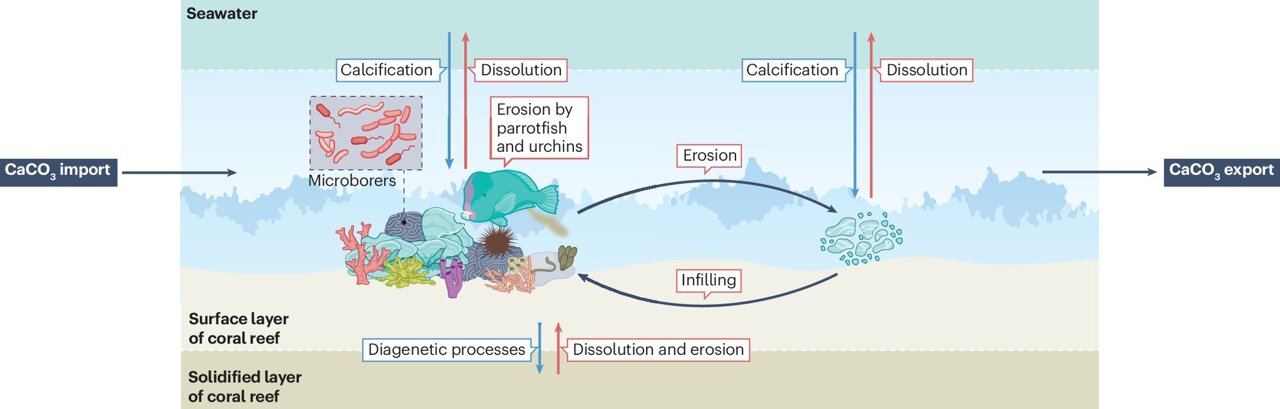
Ocean acidification further exacerbates the problem by reducing the ability of corals to build their calcium carbonate skeletons through a process known as calcification. Warming, darkening, and deoxygenation also negatively impact calcification, making it increasingly difficult for corals to maintain their structures.
The Role of Coral in Reef Ecosystems
Coral reefs are constructed primarily through the accumulation of calcium carbonate, which comes from corals themselves, as well as coralline algae and other calcareous seaweeds. However, as ocean pH levels decrease due to acidification, processes like bio-erosion and dissolution begin to break down these structures. This dynamic shift means that coral reefs are not only struggling to grow but are also being eroded at an alarming rate.
A meta-analysis examining the effects of climate change on calcification and bio-erosion revealed that coral reefs transition to net erosion under all scenarios, even under low to moderate greenhouse gas emissions. This means that reefs are dissolving or being consumed faster than they can regenerate.
Potential Scenarios for the Future of Coral Reefs
Scientists have explored four potential scenarios for the future of coral reefs:
- Present-day extreme reefs: These are locations where conditions already resemble those expected at the end of the century. They are dominated by coralline algae and slow-growing, heat-resistant corals.
- Degraded reefs: These reefs are dominated by bio-eroders such as sponges and sea urchins, with low coral cover.
- Heat-tolerant corals: Under low to moderate greenhouse gas emissions scenarios, corals may develop heat tolerance, allowing them to keep pace with temperature changes. These reefs would be dominated by faster-growing corals with symbiotic microalgae.
- Restored reefs: This scenario involves using heat-tolerant corals in restoration efforts. However, this approach would need to cover half of global coral reefs to maintain net growth, which is considered unlikely.
Only reefs with heat-tolerant corals could prevent the transition to net erosion, highlighting the importance of developing and implementing strategies to enhance coral resilience.
The Need for Global Efforts
Despite the challenges, the fate of coral reefs is not yet sealed. Immediate action is required to protect and restore these ecosystems. Scientists emphasize the need for global efforts to gather more data, particularly from regions like the Pacific, where measurements are lacking. Understanding the impacts of deoxygenation and coastal darkening on coral reefs is crucial for developing effective conservation strategies.
Another critical question is how long reef structures will persist after living corals are removed. While this remains uncertain, rapid data collection and management efforts are essential to better protect coral reefs before climate change intensifies further.
Governments around the world, including New Zealand, must take proactive steps to support initiatives aimed at preserving coral reefs. The time to act is now, as the survival of these ecosystems depends on our collective efforts.
For more information, refer to the original study published in Nature Reviews Earth & Environment (DOI: 10.1038/s43017-026-00764-4).
Posting Komentar untuk "Heat-resistant corals could save some reefs, but most continue to decline"
Please Leave a wise comment, Thank you