
Will auto stop-start soon disappear?
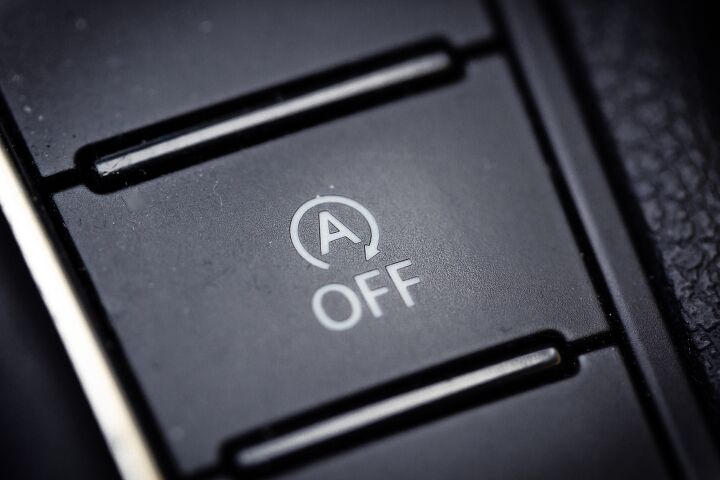
As part of the evolving emissions policy under the Trump administration, the Environmental Protection Agency (EPA) has announced it will no longer back engine stop-start systems in all vehicles sold in the United States. Nevertheless, there is a need for significant clarification regarding the implications of this decision.
Several sources appeared to believe that automatic stop-start technology had been previously enforced by the government. However, this system, which turns off the engine when stationary to improve emissions and conserve fuel, was never officially required. Rather, the United States introduced a credit system in 2012 that considered this feature when assessing emissions standards.
That's what is being eliminated.
Nevertheless, the Trump administration aims to use this news to gain more backing for its efforts to reduce regulations on vehicle emissions. It is well-known that, although automatic stop-start systems are installed in most modern vehicles, they are generally unpopular among drivers. Trump indicated that this decision was part of his objective to ease regulatory constraints on the industry, which he argued have led to more costly cars with features that Americans do not desire. Including auto stop-start in its list of emission rule changes likely offers the White House its strongest opportunity to secure some extra support.
This was reiterated by the EPA, which concentrated its main message on asserting that the 2009 Greenhouse Gas (GHG) Endangerment Findings from the Obama administration paved the way for unsustainable emission standards that have increased the cost of vehicles. The agency also claims that reversing years of strict emission rules would save American taxpayers more than $1.3 trillion.
From the EPA:
The 2009 Endangerment Finding served as the basis for trillions of dollars in regulations, including the Obama and Biden Administrations’ unlawful efforts to push for Electric Vehicle (EV) mandates and compliance rules, while at the same time increasing vehicle costs for American families and small businesses — restricting economic mobility and the American Dream. The final rule is expected to save Americans over $1.3 trillion by eliminating the regulatory requirements to measure, report, certify, and comply with federal greenhouse gas (GHG) emission standards for motor vehicles, and it also removes related compliance programs, credit provisions, and reporting obligations that were solely intended to support the vehicle GHG regulatory system. Americans will gain clarity, flexibility, and regulatory relief, enabling companies to plan effectively and supporting American families.
In concluding this regulation, the EPA thoroughly examined and reassessed the legal basis of the 2009 Endangerment Finding and the language of the Clean Air Act (CAA) in view of later legal developments and court rulings. The agency determines that Section 202(a) of the CAA does not offer statutory authority for the EPA to set motor vehicle and engine emission standards in the way previously applied, including for addressing global climate change, and thus there is no legal foundation for the Endangerment Finding and associated regulations. The EPA strongly holds that the 2009 Endangerment Finding by the Obama Administration went beyond the agency's authority to address "air pollution" that affects public health and well-being, and that a decision of this significance, with wide-ranging economic and policy impacts, is solely the responsibility of Congress. Unlike previous administrations, the Trump EPA is dedicated to adhering strictly to the law as it is written and as Congress intended — not as some may desire it to be.
It is evident that views on this issue vary andMr. Healey recently released an article arguing that the EPA during Donald Trump's administration has taken excessive steps in reversing regulations..
Although I have much less confidence in government regulators making the correct decisions, they have still managed to complete tasks that deserve considerable recognition. For instance, requiring car manufacturers to adopt standardized on-board diagnostics in 1996 stopped dealer networks backed by manufacturers from controlling vehicle repairs. We might even require similar regulatory support again through right-to-repair laws. Connected vehicles are collecting your data, and current designs appear to deliberately complicate maintenance or repairs for anyone other than the manufacturer.
I have also criticized the Obama administration for using environmental terminology to promote projects that appeared detrimental to the environment. For instance, "Cash for Clunkers" was presented as a method to encourage people to purchase newer, supposedly "greener" cars. However, the outcome was merely a short-term increase in declining new-vehicle sales and the destruction of over 600,000 operational used vehicles.
Comparable critiques can be directed at the modifications made during the Obama administration to corporate emission standards, which included considering a vehicle's size based on its wheelbase and track width. This approach essentially encouraged car manufacturers to shift towards producing larger vehicles in order to take advantage of regulatory gaps, potentially leading to stagnant overall fuel efficiency levels across the country.
The main idea is to demonstrate that regulations may appear beneficial but can sometimes contradict the intended goals. Naturally, they can also benefit the public when executed correctly.
That being said, it seems there is an excess of modern emission technologies that have been promoted by the government, which many people would be glad to eliminate. Anyone who works and performs their own maintenance has probably complained about some type of emission-related component at one point. However, the most disliked elements are those that also frustrate regular commuters who have never touched a wrench. Automatic stop/start definitely belongs to this group of particularly unpleasant mechanical issues.
However, it actually functions by lowering fuel usage — which makes this next part extremely difficult to write.
The idea behind auto stop-start technology is quite straightforward. When your vehicle is not moving, it's essentially consuming fuel unnecessarily and creating noise, so turning off the engine can lead to better fuel efficiency. Although the effectiveness varies depending on driving conditions and location, many studies suggest that this system can lower overall fuel use by up to 5 percent to 20 percent.
It's significant to note. However, it doesn't cover the entire scenario. Although some fuel is saved, there are valid arguments that frequently turning your engine on and off can cause early wear on parts. While these aren't initial cold starts and most cars have reinforced starters to handle the increased demand, there are genuine worries about the system causing more strain on batteries and other elements. This might lead to higher repair costs later, which could or might not be balanced by the minor reduction in fuel use.
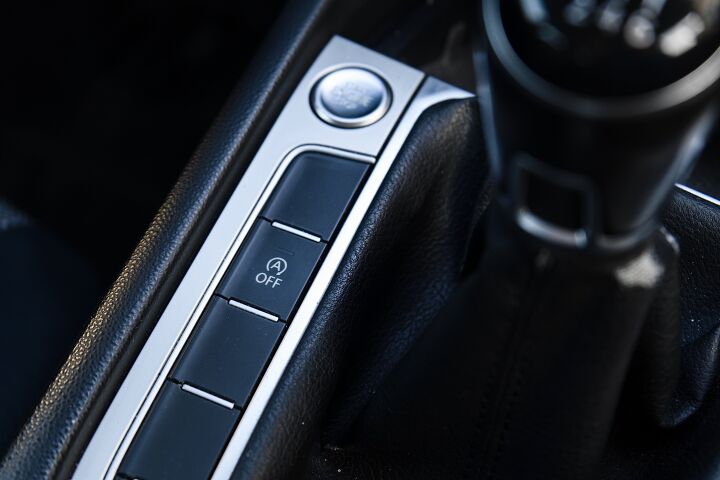
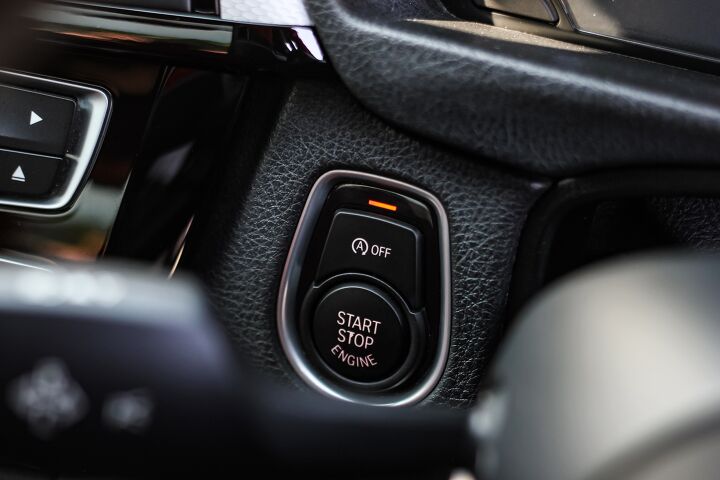
The technology has also advanced significantly over time. Early iterations of stop-start systems could be very disruptive compared to today's versions and were clearly more damaging to engine components. Several models that include this feature allow drivers to turn it off temporarily with the press of a button. However, these improvements have not increased the popularity of stop-start systems among drivers. I haven't met anyone who genuinely likes the system, and it was one of the most common complaints from the drivers I've spoken with.
None of the previous points implies that changes will occur, nevertheless. Car and Driver recently contacted multiple car manufacturersTo check if they intended to discontinue auto stop-start technology, the responses were varied. This is probably because there's a genuine chance that any changes the current EPA implements regarding emissions could be reversed by the following administration. Industry statements from the Automotive Alliance for Innovation (the world's biggest automotive lobby) clearly suggest this possibility.
Today's move aligns with the EPA's previous statement about its plan to revoke the endangerment finding and address some of the unrealistic emissions rules set during the previous administration," said John Bozzella, president and CEO of the Alliance for Automotive Innovation. "I've mentioned this before: the vehicle emissions standards established by the prior administration are very difficult for automakers to meet considering the current market demand for electric vehicles. The automotive industry in the United States continues to concentrate on maintaining vehicle options for consumers, ensuring the industry remains competitive, and following a long-term trajectory of reducing emissions and developing cleaner vehicles.
It's likely that you'll keep encountering auto stop-start technology in new cars for the near future. The government could even make it a requirement, rather than just a encouraged feature, in the years ahead. Without a way to foresee what's coming, it's hard to say for sure. However, the current EPA has made it clear that it aims to shift regulatory decisions back to Congress, possibly slowing down any executive efforts to reverse Trump-era emission standards. Although it's challenging to trust Congress, which often appears to neglect the interests of the general public, we've witnessed the executive branch frequently issuing broad statements that overturn previous regulations after each election.
Although this approach has often resulted in significant subsidies (and even bailouts) for car companies, it has also created challenges in vehicle development and pushed them down paths that haven't necessarily been successful (such as all-electric vehicles). Keep in mind that there is typically a lot of political posturing combined with rare instances of effective policy, and all of this influences the types of vehicles manufacturers ultimately produce—or choose not to produce.
The Endangerment Finding has led to 16 years of limited consumer options and trillions of dollars in concealed expenses for Americans,said EPA Administrator Lee Zeldin. "Known by some as the 'Holy Grail' of the 'climate change religion,' the Endangerment Finding has now been removed. The Trump EPA is strictly adhering to the law, bringing common sense back to policy, providing consumer choice for Americans, and promoting the American Dream. As EPA Administrator, I am proud to implement the biggest deregulatory action in U.S. history for the benefit of American taxpayers and consumers. As an added advantage, the off-cycle credit for the widely disliked start-stop feature in vehicles has also been eliminated."
Today, we have an EPA that suggests reducing regulations on the industry and aims to separate itself from rules based on studies that are seen as contentious. The same agency could adopt a completely different stance in a few years with a new leadership. Considering this, car manufacturers are likely to avoid completely removing auto stop-start features. Nevertheless, these regulatory shifts still offer something to think about for the next development phase.
[Images: Tudor Alexandru/Shutterstock; Jakub Snabl/Shutterstock; Muanpare Wanpen/Shutterstock]
Become a TTAC member. Get the newest updates, articles, TTAC perspectives, and all other content that delivers the truth about cars ahead of everyone else. subscribing to our newsletter.
Posting Komentar untuk "Will auto stop-start soon disappear?"
Please Leave a wise comment, Thank you