
Austria Launches Cutting-Edge Rail Lab for Real-World Steel Fatigue and Brake Vibration Studies
Freight cars and engines endure constant mechanical strain. Each journey exposes their frames, wheels, and braking mechanisms to changing forces and varying weights.
Companies are required to decrease weight and power consumption while adhering to rigorous safety regulations.
A recently established research facility in Austria is designed to assist the industry in addressing those requirements.
On Thursday, scientists from Graz University of Technology unveiled the Christian Doppler Laboratory focused on Structural Integrity in Rail Vehicle Design.
The lab will create scientific techniques to support the development of safer, lighter, and more durable rail vehicles.
Government backs rail innovation
Government backs rail innovation
The Austrian Federal Ministry of Economy, Energy, and Tourism is supporting the initiative.
Officials say rail technologyis crucial to economic competitiveness and climate policy.
"A contemporary industrial country requires the most effective connections to the future," stated Wolfgang Hattmannsdorfer, the Austrian Federal Minister of Economy, Energy, and Tourism.
Rail transportation serves as the foundation of our movement and infrastructure strategy, acting as a crucial factor for competitiveness, energy efficiency, and economic stability.
He connected the laboratory to larger industrial objectives.
Mobility is among the five key focus areas in our industrial plan, as advanced transportation and energy systems form the foundation of industrial power.
He stated, "By creating lighter, longer-lasting, and more energy-efficient train cars, we are promoting climate action and ensuring technological independence and economic growth in Austria. The new CD Laboratory provides the scientific basis for this effort, while also facilitating the rapid integration of new discoveries into industrial use."
The effort highlights the issues encountered by railway operators around the globe, including in the United States.
Transit authorities and cargo transport companies aim to use lighter vehicles to reduce fuel consumption.
Regulatory authorities continue to require strict adherence to safety regulations.
Martin Leitner, the laboratory's director, stated that scientists will concentrate on techniques that can be implemented by industries in a short period.
"Our objective is to provide reliable scientific approaches that will serve as the foundation for real-world implementation in the industry," said Martin Leitner, Head of the Laboratory at the TU Graz Institute of Structural Durability and Railway Technology.
This will allow us to provide a significant impact on the advancement of secure, durable, and cutting-edge rail vehicle designs.
The lab will work together with Siemens Mobility Austria GmbH, Plasser & Theurer, and Miba Frictec GmbH.
Emphasize exhaustion and braking
The study initiative is split into two components.
The initial study will examine the fatigue resistance of welded joints.steelframeworks employed in automobile frames, upper structures, and low-weight axle systems for wheels.
Engineers will examine the impact of materials, manufacturing methods, and finishing processes on the lifespan of parts.
The group will also analyze practical load situations, such as intricate multiaxial stresses.
Scientists seek to transform experimental findings into usable guidelines for producers.
The second module will analyze the strength and stability of specific parts and systems.
A major emphasis is placed on the operational characteristics of braking systems, particularly vibrations caused by friction.
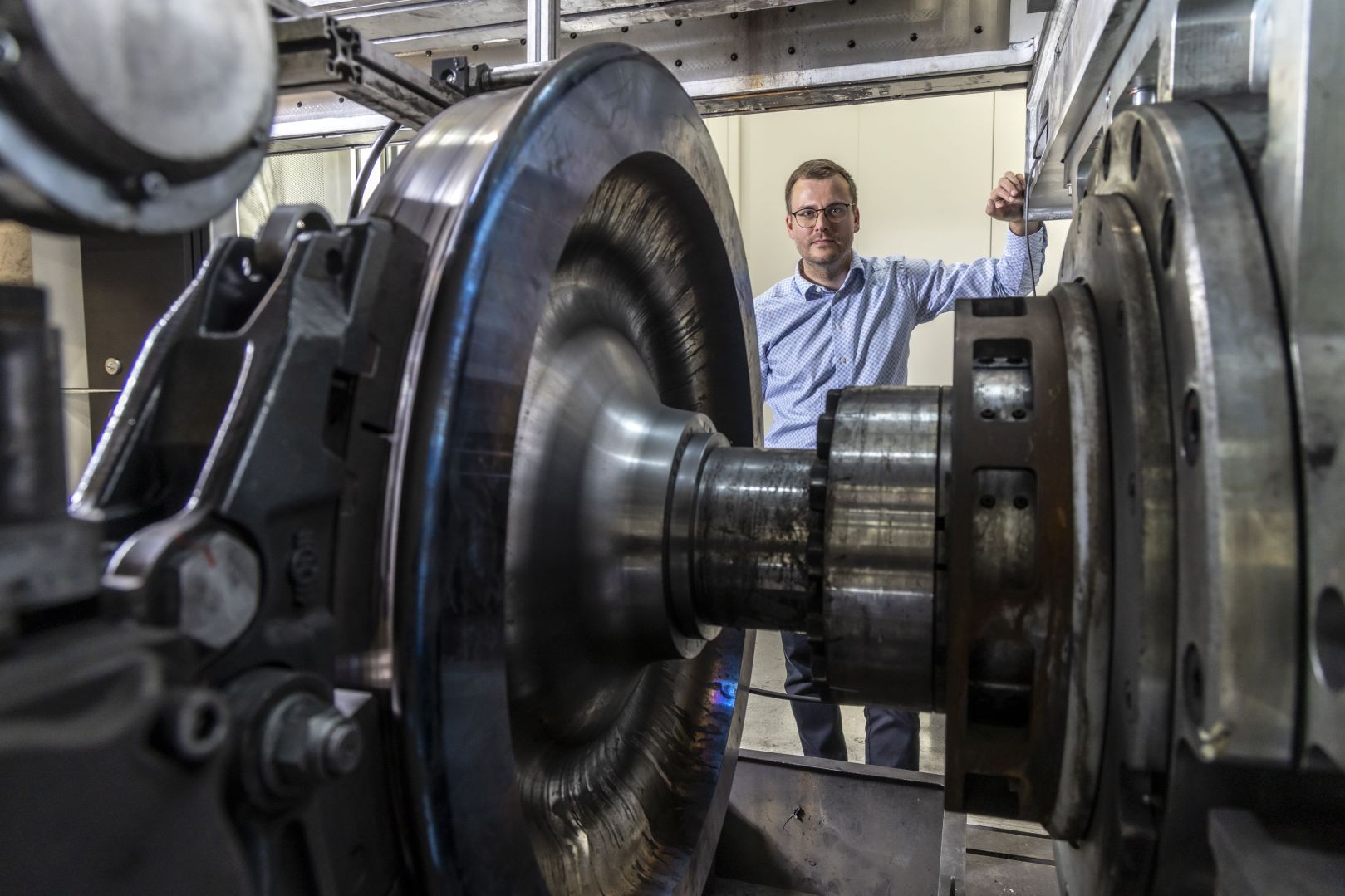
Scientists will perform simulations and carry out tests on TU Graz's state-of-the-art brake testing facility.
These assessments will examine innovative design methods in practical scenarios.
Both components will be connected via final durability evaluations employing vibration fatigue techniques.
The lab will also examine wheel-rail contact fatigue and deterioration in friction braking systems.
A recently created roller test stand enables evaluation in conditions that closely resemble actual operation.
Further research on disc and blockbrakeswill back enhanced assessment and development techniques.
Experts believe this research may contribute to increasing the lifespan, decreasing upkeep requirements, and enhancing energy effectiveness in upcoming train systems.
Posting Komentar untuk "Austria Launches Cutting-Edge Rail Lab for Real-World Steel Fatigue and Brake Vibration Studies"
Please Leave a wise comment, Thank you