
Rager Review: Fight Robots and Stay Fit in VR
The Rise of VR Fitness: A New Era of Combat and Movement
Virtual reality (VR) has always had a unique ability to transport users into entirely new worlds. With the introduction of the PSVR2, this experience is evolving further, blending immersive gameplay with physical activity. One of the most exciting titles in this space is Rager, a game that takes the concept of first-person combat and turns it into a full-body workout. By wielding swords, maces, and other weapons, players are not only engaging in intense action but also burning calories in the process.
The Intersection of VR and Fitness
The fusion of VR and fitness brings with it a set of unique challenges and opportunities. On one hand, VR excels at creating a sense of presence, making users feel as though they are truly inside the game world. This is achieved through precise tracking of head and arm movements, which translates into real-time interactions within the virtual environment. Unlike traditional gaming, where players often remain seated for extended periods, VR encourages more movement and engagement.
On the other hand, the design of VR headsets can be a double-edged sword. The bulky displays that encase the face can lead to discomfort, especially during prolonged sessions. For games designed with fitness in mind, this means that players are often encouraged to move rapidly and vigorously, leading to sweat and exertion. While future headset designs may address these issues, current models like the PSVR2 still present some limitations.
Rager: A New Kind of Combat Game
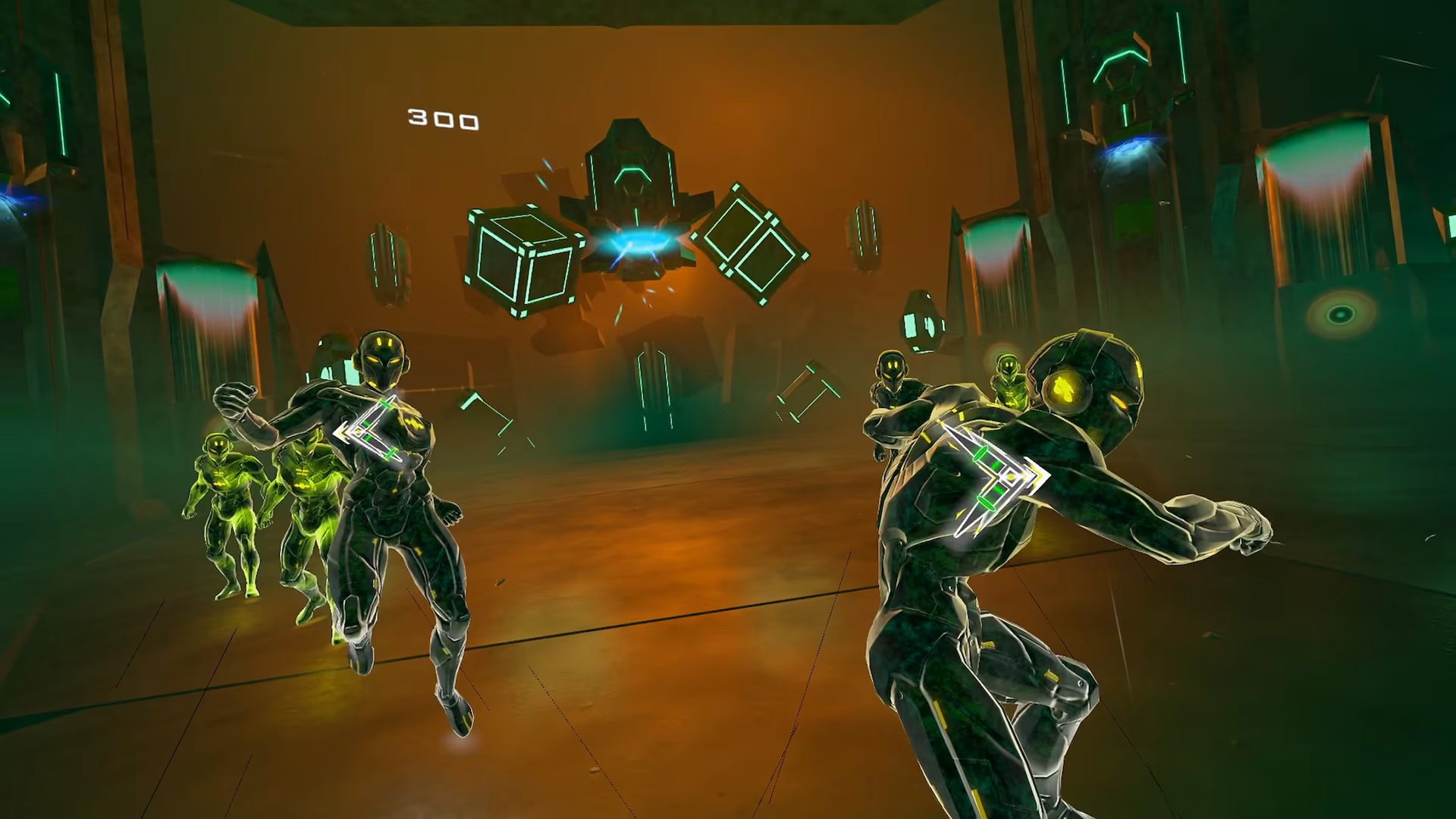
Rager is a rhythm-based combat game that draws inspiration from titles like Beat Saber and Pistol Whip. Players find themselves in a neon-lit arena, surrounded by robotic enemies that attack with a mix of punches, kicks, and melee weapons. The game's EDM soundtrack serves as a guide, with each beat dictating when to strike or parry. This combination of music and action creates an engaging and dynamic experience.
The game is divided into three zones, each containing three levels and a boss battle. As players progress, they are introduced to a variety of weapons, including swords, maces, claws, and two-handed weapons. These tools are not only visually striking but also provide haptic feedback, allowing players to feel the impact of their attacks and defenses.
Gameplay Mechanics and Challenges
In Rager, players must pay close attention to visual cues that appear in front of their enemies. These symbols indicate the correct angle for parrying or attacking, as well as the appropriate weapon to use. In many levels, players will dual-wield weapons, requiring them to adapt quickly to different combat scenarios. This adds a layer of complexity to the gameplay, as players must balance offense and defense while navigating the fast-paced action.
One of the key features of Rager on the PSVR2 is the ability to use an analog stick to change the viewpoint when enemies approach from behind. This helps prevent the player from getting tangled in the headset's cable. However, this feature is not always reliable, as the angle of rotation can vary unpredictably. While players can choose to physically turn around, this often results in the cable wrapping around their legs by the end of each level.
The Future of VR Gaming
As VR technology continues to evolve, so too will the possibilities for immersive and physically engaging experiences. Games like Rager represent a promising direction, blending entertainment with fitness in a way that is both fun and challenging. Whether you're a seasoned gamer or someone looking for a new way to stay active, Rager offers a unique and exciting opportunity to combine the two.
Posting Komentar untuk "Rager Review: Fight Robots and Stay Fit in VR"
Please Leave a wise comment, Thank you