
New Theory Suggests Universe Began Inside a Black Hole
For decades, the Big Bang Theory has stood as the leading explanation for the origin of the universe. Supported by observations such as the discovery of the cosmic microwave background in the 1960s, it describes a cosmos that began as an extremely hot, dense state and rapidly expanded. Yet science advances by questioning even its most established frameworks, and a new proposal from researchers at the University of Portsmouth invites a fresh perspective on how everything may have started.
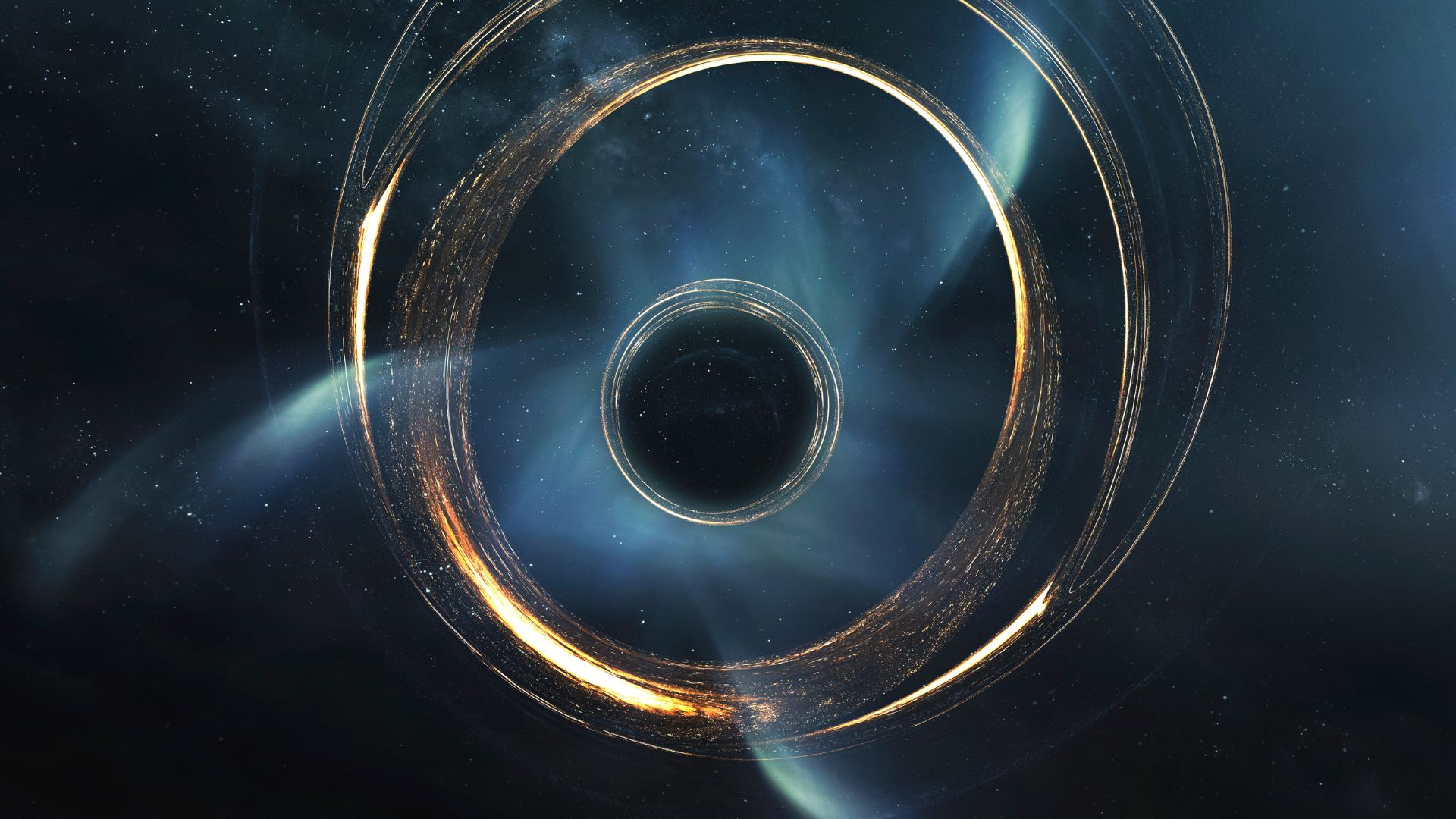
In a study published in Physical Review D, physicists outline what they call the “Black Hole Universe” hypothesis. Instead of a singular beginning from an infinitely dense point, the model suggests that our universe could have formed inside a black hole embedded within a larger, parent cosmos. This approach does not discard established physics, rather it seeks to reinterpret cosmic origins through a different lens.
The idea touches on one of humanity’s oldest questions, where existence comes from. While the Big Bang remains the most robust explanation available, alternative frameworks continue to emerge as researchers attempt to address unresolved theoretical challenges. Among these challenges is the notion of a singularity, a point where known laws of physics cease to function predictably.
Rethinking the Limits of the Big Bang
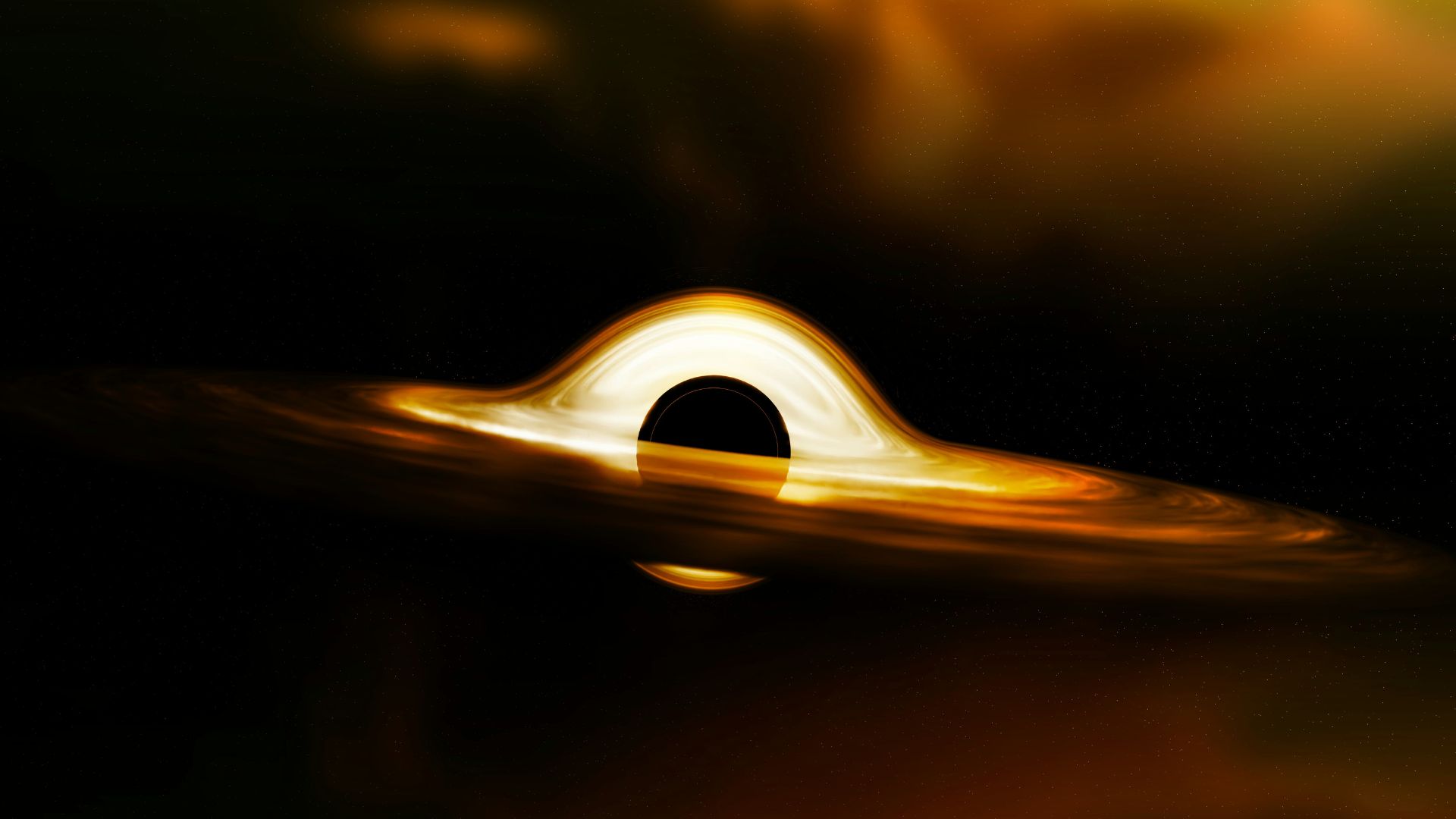
The traditional Big Bang model begins with a state of infinite density, a condition that signals the breakdown of classical physical laws. For many cosmologists, this mathematical boundary indicates that the story may be incomplete. The new hypothesis explores whether gravitational collapse, rather than leading to a final singularity, might instead trigger a transformative process.
Drawing on principles from general relativity and quantum mechanics, the researchers propose that a collapsing mass inside a black hole may not end in destruction. Under specific conditions, it could “bounce” into a new phase of expansion. In this scenario, what appears as a black hole from one universe might internally generate an entirely new cosmic domain.
This concept aligns with the scientific method’s core principle, testing dominant interpretations by approaching them from alternative angles. By examining what happens when matter compresses under extreme gravity, the team reframes the origin story as part of a potentially larger cosmic cycle rather than a single, isolated event.
Gravity, Quantum Mechanics, and a Cosmic Bounce
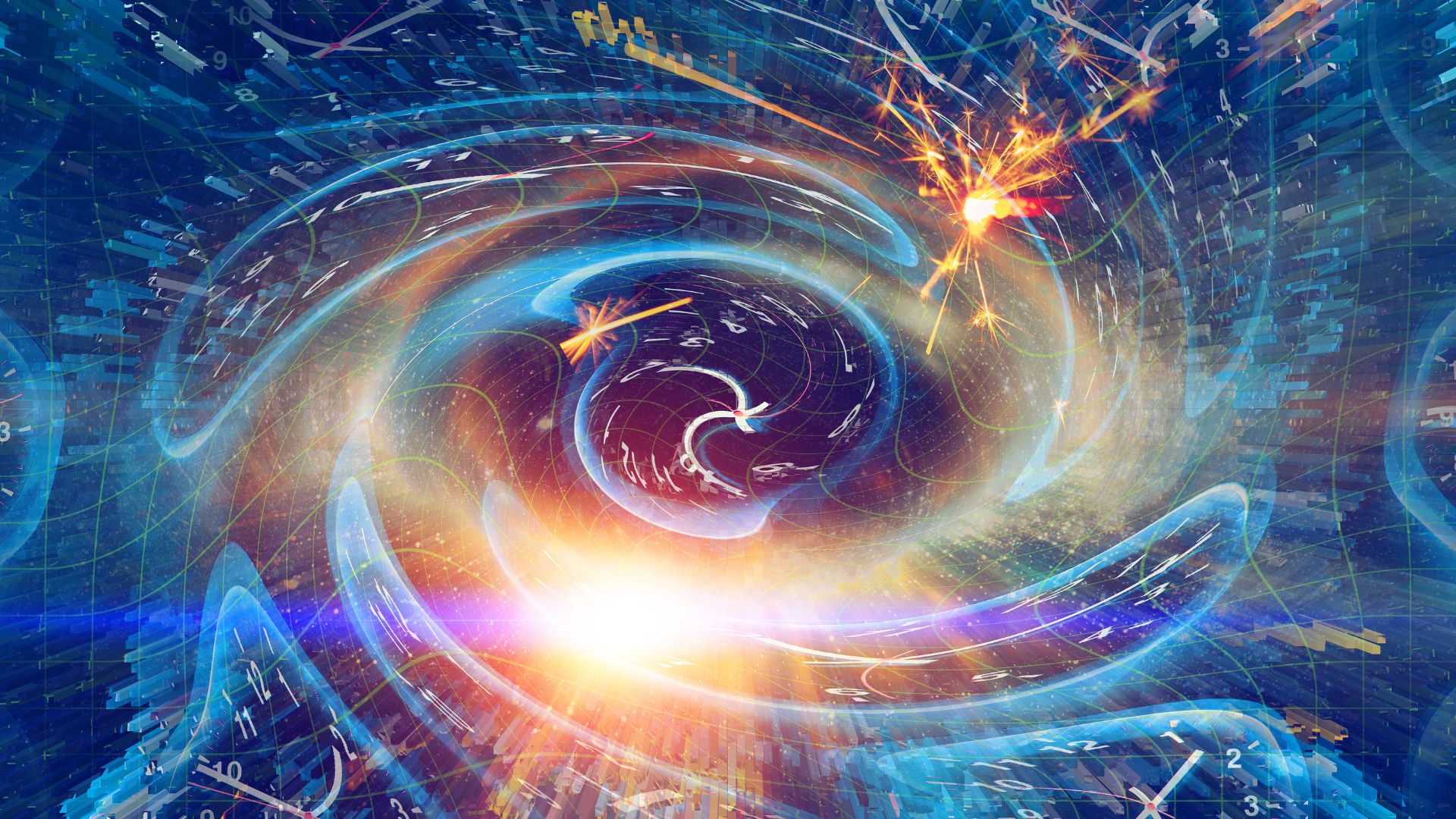
A central strength of the Black Hole Universe model lies in its mathematical consistency. According to its authors, the proposed bounce occurs within the established framework of general relativity, while incorporating fundamental aspects of quantum theory. This integration aims to avoid the problematic infinities associated with singularities.
Importantly, the theory does more than speculate. It generates predictions that can be evaluated through observation. If accurate, traces of such a cosmic bounce might leave subtle signatures in large scale structures or background radiation patterns. These measurable consequences are essential for transforming an intriguing idea into a scientifically viable explanation.
The discussion also highlights a broader truth about black holes themselves. Despite decades of study, their internal structure remains largely unknown. This uncertainty naturally fuels theoretical exploration, as scientists attempt to bridge the gap between what is observed and what remains hidden behind an event horizon.
Testing the Future of Cosmology
Efforts to evaluate this hypothesis may soon benefit from advanced observational tools. The European Space Agency mission known as ARRAKIHS, designed to analyze faint structures around galaxies, could provide data relevant to distinguishing between competing cosmological models. By examining subtle patterns in galactic halos, researchers hope to gather clues about the universe’s earliest phases.
Even if future findings ultimately reinforce the Big Bang as the most accurate description of cosmic origins, exploring alternatives strengthens scientific understanding. Each hypothesis, whether confirmed or ruled out, refines the questions and sharpens the tools used to investigate them.
In the end, the search for cosmic beginnings reflects more than technical inquiry. It represents a persistent human drive to comprehend existence itself. Whether the universe began with a singular explosive expansion or emerged from the depths of a black hole in another realm, the pursuit of answers continues to push knowledge forward.
Posting Komentar untuk "New Theory Suggests Universe Began Inside a Black Hole"
Please Leave a wise comment, Thank you