
Heat-powered chips break traditional energy barriers
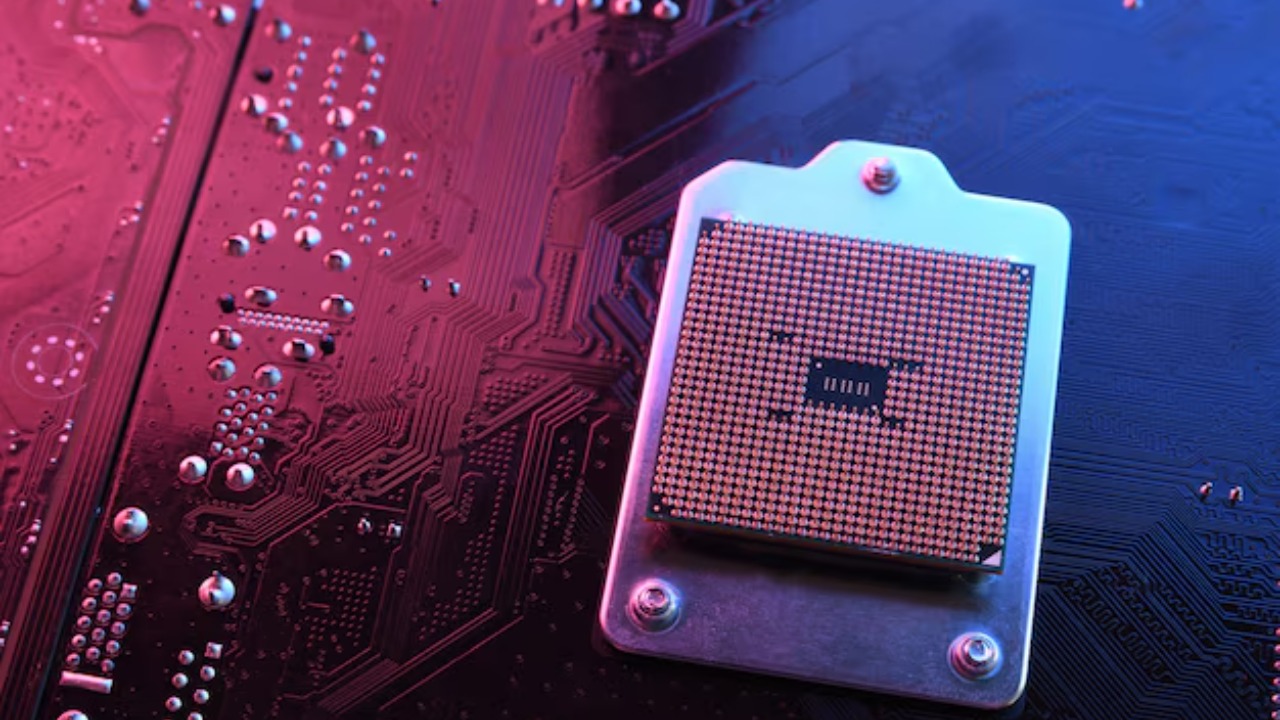
A New Era of Computing: Stochastic Processing Units
Researchers have developed a small-scale computer that operates using thermal noise, the random electrical fluctuations that traditional chip designers work hard to eliminate. This device, known as a stochastic processing unit, utilizes coupled analog circuits to perform tasks such as Gaussian sampling and matrix inversion by treating heat as a computational resource rather than a waste product. If this approach can be scaled up, it could potentially bypass the fundamental energy floor that has limited digital processors since the early 1960s, offering a new direction for power-intensive artificial intelligence workloads.
The Concept of Thermodynamic Linear Algebra
The stochastic processing unit is constructed from coupled RLC circuits, which are the same resistor–inductor–capacitor building blocks found in radios and signal filters. Instead of forcing transistors through deterministic logic gates, the system allows its components to settle into statistical equilibrium with their thermal environment. The result is a machine that performs what its designers refer to as thermodynamic linear algebra: solving matrix equations by allowing noise-driven oscillations to converge on correct answers probabilistically.
Two concrete demonstrations support the experimental evidence. The unit executed Gaussian sampling, a core operation in generative AI models, and carried out matrix inversion, a crucial calculation in scientific computing and machine learning. Both tasks were completed without the clock-synchronized, bit-precise operations that define mainstream processors from smartphone chips to data center GPUs. This work redefines noise not as an obstacle to accuracy but as the engine that drives computation forward.
Analog Outputs and Probabilistic Results
Because the hardware is analog and stochastic, its outputs are distributions rather than single numbers. In the Gaussian sampling experiment, the circuit’s voltage fluctuations naturally reproduced the bell-shaped curve that digital systems usually approximate with pseudo-random number generators. In the matrix inversion test, the coupled oscillators settled into a configuration whose correlations encoded the inverse of an input matrix. Reading out those correlations effectively solved the equation in one physical step, rather than through a long sequence of arithmetic instructions.
Landauer’s Limit and Energy Efficiency
Every time a conventional digital chip erases a bit of information, physics demands a minimum energy payment. Rolf Landauer established this floor in 1961, showing that logically irreversible operations must dissipate at least kT ln 2 of energy per bit, where k is Boltzmann’s constant and T is the absolute temperature. For decades, this limit was a theoretical curiosity because real processors wasted orders of magnitude more energy than the Landauer bound. That gap has narrowed as transistors have shrunk, and data center power consumption has surged alongside the rise of large-scale AI training.
Thermodynamic computing sidesteps the problem by avoiding irreversible bit erasure altogether. Because the stochastic processing unit encodes information in the continuous probability distributions of analog signals, it does not perform the deterministic logic steps that trigger Landauer’s penalty. In effect, the machine trades exactness for efficiency, operating in a regime where many approximate samples are cheaper than a single perfectly precise answer.
Enhancing Speed Through Noise
A separate theoretical study explores the speed question head-on. The proposal, published in a Nature Portfolio journal, demonstrates that injecting a precisely calibrated additional noise source into a thermodynamic computer can accelerate its equilibration rate without degrading computational fidelity. In practical terms, this means the system’s effective clock speed increases even though no extra deterministic control circuitry is added.
The analysis relies on overdamped Langevin dynamics, a standard framework in statistical physics for describing particles buffeted by thermal fluctuations. By tuning the amplitude and spectral profile of the injected noise, the authors show that the system reaches its target probability distribution faster. For anyone familiar with simulated annealing or stochastic gradient descent in machine learning, the intuition is related: controlled randomness helps a system escape local traps and find global solutions more quickly. The difference here is that the randomness is physical, not algorithmic, and it can be supplied by the environment rather than by energy-intensive digital circuitry.
Expanding Beyond Linear Algebra
A peer-reviewed study in Science Advances extends the concept beyond linear algebra into general-purpose logic. The researchers model autonomous quantum thermal machines that function as “thermodynamic neurons,” units coupled to heat baths that execute logical functions without external clocking or deterministic control signals. The work establishes a principled physical model showing which Boolean operations can be implemented purely through thermal coupling, giving the field a theoretical foundation comparable to the logic gate abstractions that underpin digital computing.
This matters because it answers a basic feasibility question: can noise-driven hardware do more than specialized math? The Science Advances results suggest it can, at least in principle, replicate the logical building blocks needed for general computation. The authors map out how different temperature gradients and coupling configurations correspond to AND, OR, and more complex operations, all realized through the natural flow of heat.
Physics-Based ASICs and Efficiency Gains
A technical white paper with academic and agency-affiliated coauthors makes the efficiency case explicit. The document defines a class of hardware called “physics-based ASICs,” application-specific integrated circuits that relax determinism and synchronization to exploit physical dynamics, including thermal noise, for large energy-efficiency gains. The argument is that the computing industry’s insistence on exact, reproducible bit operations forces chips to fight their own physics, burning energy to maintain precision that many AI workloads do not actually require.
Generative models, recommendation engines, and sensor-fusion systems all operate on probabilistic data. A chip that natively produces probability distributions rather than deterministic outputs could skip the energy-intensive step of simulating randomness on hardware designed to suppress it. In this view, stochastic processors are not exotic curiosities but specialized accelerators matched to the statistics-heavy nature of modern machine learning.
Heat-Driven Structures and Broader Design Ideas
Parallel research pushes the same philosophy into other domains. One line of work explores mechanical and structural systems whose shapes or stress patterns encode solutions to optimization problems, driven by thermal fluctuations in their materials. In such setups, random motion at the microscopic level nudges the structure through a landscape of configurations until it settles into a low-energy state that corresponds to an optimal or near-optimal answer.
These ideas resonate with the stochastic processing unit’s designers, who argue that computation should be seen less as a sequence of instructions and more as the guided relaxation of a physical system. In that picture, a matrix inversion or a neural network inference is not something a processor “does” step by step, but a state that a carefully engineered object naturally falls into when exposed to the right boundary conditions and noise sources.
From Lab Curiosity to Practical Hardware
Significant hurdles remain before thermodynamic computers can leave the lab. Scaling small arrays of RLC oscillators into chips with millions of coupled elements will test fabrication techniques and analog design methods that have atrophied in the digital era. Error characterization and debugging will look very different when every run of a program yields a slightly different answer by design.
Yet the incentives to overcome those challenges are strong. As AI workloads expand and energy constraints tighten, the appeal of machines that compute with heat instead of fighting it is likely to grow. If stochastic processors and physics-based ASICs can deliver even a modest fraction of their projected efficiency gains, they could reshape the architecture of data centers and edge devices alike, ushering in an era where randomness is not the enemy of computation but its most valuable ally.
Posting Komentar untuk "Heat-powered chips break traditional energy barriers"
Please Leave a wise comment, Thank you