
Boeing's Real-Life X-Wing Starfighter Revealed
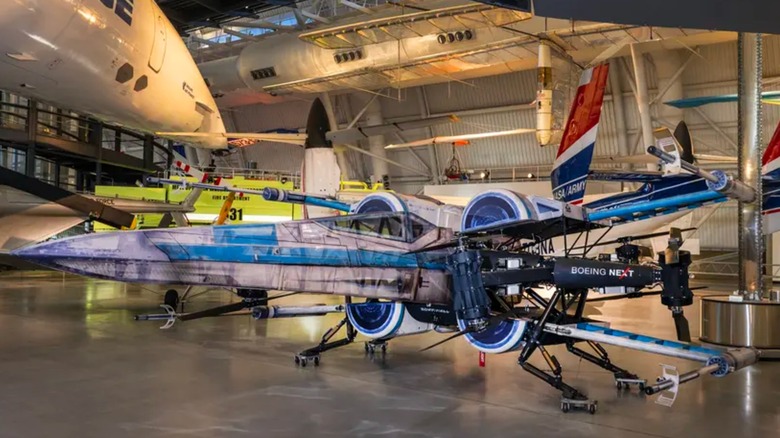
Science fiction has always been a source of inspiration for real-world engineering and innovation. Among the many iconic vehicles that have captured the imagination, the X-wing starfighter from the "Star Wars" universe stands out as one of the most recognizable. While the TIE Fighter might be more commonly associated with the dark side, the X-wing is often seen as a symbol of hope and resistance. This cultural significance led to an unusual collaboration between Boeing and Walt Disney in 2019, where the aerospace giant created two real-life versions of the X-wing.
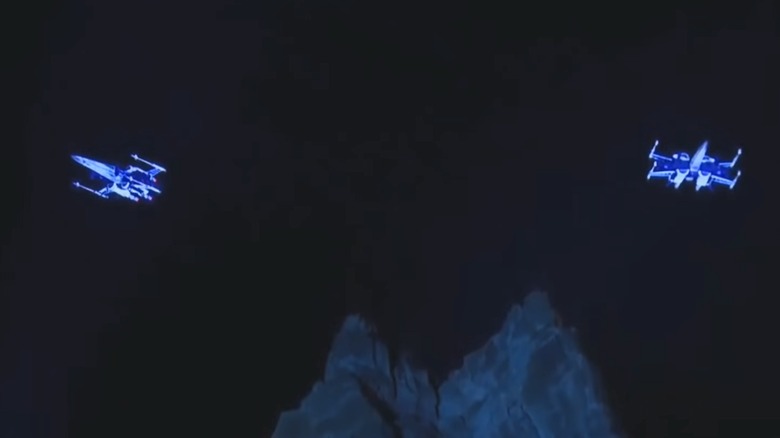
The project was part of a larger effort to celebrate the opening of Star Wars: Galaxy's Edge at Walt Disney World. Boeing modified two CV2 Cargo Air Vehicles (CAVs) to resemble the famous X-wing starfighters. These drones were flown over the heads of attendees during the event, creating a memorable experience for fans. However, these drones were not true replicas. They could only hover slowly and lacked the ability to jump to lightspeed or maneuver like their fictional counterparts. Their wings remained fixed in the iconic X-shaped attack position, and ultraviolet spotlights were used to illuminate only the X-wing shells, masking the underlying drone technology.
Despite their limitations, the drones were impressive in their own right. With a wingspan of 20.2 feet, they were not life-sized, but their size was sufficient to create a dramatic effect when viewed from a distance. One of the CV2 CAVs, complete with its X-wing shell, is now on display at the Smithsonian National Air and Space Museum's Steven F. Udvar-Hazy Center in Chantilly, Virginia. Visitors can see the drone without the ultraviolet lights, offering a clearer view of how the machine functioned.
The CV2 CAV was originally developed by Boeing in 2017 as a remote-controlled delivery drone. Designed to carry up to 500 pounds of cargo, it also served as a testbed for Boeing's engineers working on advanced technologies. According to the Smithsonian National Air and Space Museum, the CV2 became the first remotely piloted large eVTOL (electric vertical takeoff and landing) aircraft to be flown in support of a commercial operation in the United States. Its role as an X-wing during the Star Wars event marked its first and last major public appearance.
However, Boeing faced significant challenges that ultimately led to the end of the CV2 project. In 2018 and 2019, two Boeing 737 Max airplanes were involved in fatal crashes, prompting the company to ground its entire fleet. This crisis, combined with the global impact of the COVID-19 pandemic in 2020, forced Boeing to shut down its NeXt division, which was responsible for projects like the CV2 CAV.
The timing of these events was particularly unfortunate. The pandemic accelerated interest in autonomous delivery drones, with countries like China using them for everything from delivering meals to transporting medical supplies. Meanwhile, the U.S. Army began testing laser weapons to counter potential threats from drones. Boeing's decision to close its drone development division just as the industry was gaining momentum can be seen as a stroke of bad luck.
Had the CV2 CAV continued to develop, it could have played a significant role in both military logistics and civilian applications. Instead, it remains a fascinating example of how science fiction can inspire real-world innovation, even if only for a short time.
Posting Komentar untuk "Boeing's Real-Life X-Wing Starfighter Revealed"
Please Leave a wise comment, Thank you