
What happens to performance and efficiency when engine compression ratio increases?
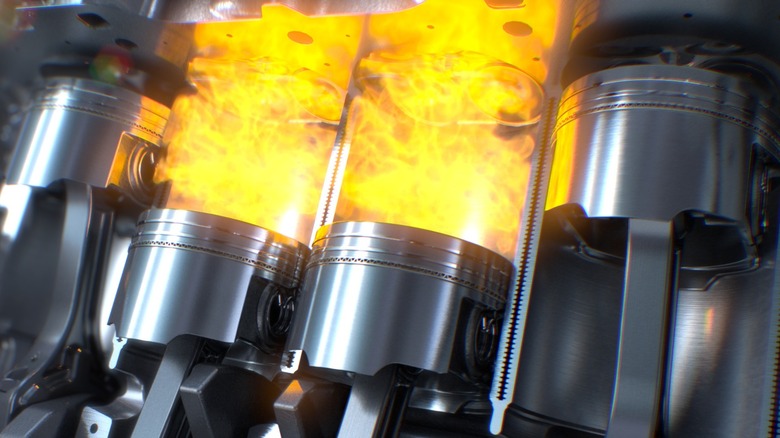
When comparing engine specifications for combustion engine vehicles, there are numerous variations in horsepower and torque outputs. Drivers often have the choice between gasoline or diesel engines, with different cylinder configurations arranged in inline or V formations.
Delving deeper into engine specs, you'll encounter a figure known as the compression ratio, which typically appears as something like 9.5:1. This ratio represents the volume of the engine cylinder when the piston is at the bottom of its stroke compared to the volume when it's at the top, where the combustion chamber is smallest.
Increasing the compression ratio of a gasoline engine, such as from 9.5:1 to 10.5:1, means that the air-fuel mixture inside the cylinder is compressed more tightly before ignition. For example, a 5.0-liter V8 engine has approximately 0.625 liters per cylinder. At a 9.5:1 compression ratio, this 625 cc volume is compressed into a space of 65.8 cc, while at 10.5:1, the space reduces to 59.5 cc.
According to YouTuber Engineering Explained, increasing an engine’s compression ratio improves its thermal efficiency. Their calculations show that the difference between a 9.2:1 and a 14.0:1 compression ratio gives the higher compression engine a 6% power advantage. While Hot Rod doesn't provide detailed math, they suggest that increasing the ratio by 1.0 within the range of common automotive compression ratios could result in power gains between 2% and 4%. The magazine also notes that published compression ratios represent theoretical static values, whereas dynamic compression ratios in real-world conditions are influenced by factors like valve timing.
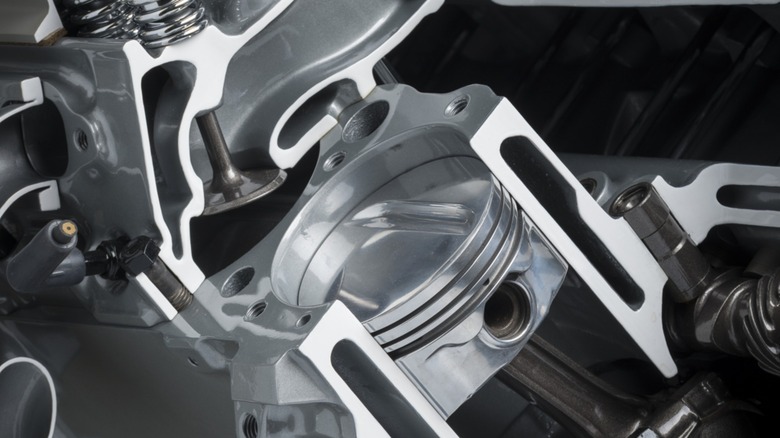
Higher compression diesel engines are more efficient than gas
Diesel engines are generally more efficient than gasoline engines, partly due to their relatively high compression ratios. Additionally, diesel fuel has 15% more energy density than gasoline, though that’s a topic for another discussion.
Diesel engines typically operate with compression ratios ranging from 14:1, which is the upper limit for high-performance gasoline engines, up to 25:1. One benefit of higher compression ratios in diesel engines is the heat generated by compressing air beyond 16:1. Unlike gasoline engines, which use a spark to ignite the compressed mixture, diesel engines rely on glow plugs for cold starts and high compression ratios to create temperatures up to 1,000 degrees Fahrenheit—enough to trigger combustion of precisely timed diesel fuel injections.
While generating such high compression ratios can reduce some internal combustion engine efficiency, the increased cylinder pressure during combustion translates into more power, particularly in terms of torque, which diesel engines are known for. Furthermore, the smaller combustion area in high compression engines (up to 16:1) allows the fuel load to burn faster and more completely, reducing ignition delay, emissions, and improving fuel economy.
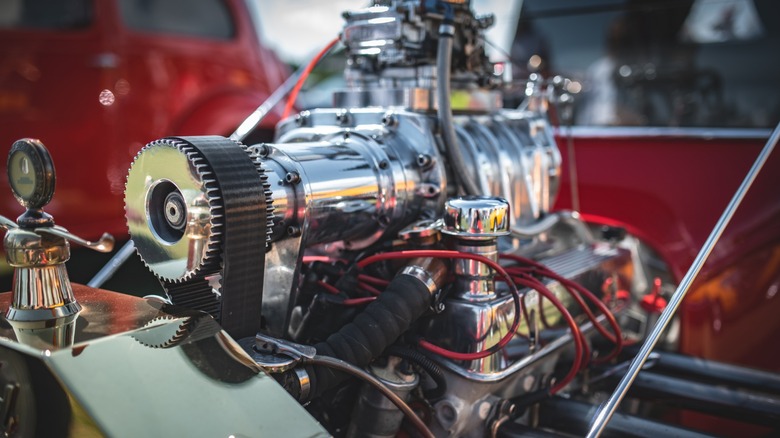
Why don't all engines use higher compression ratios?
If diesel engines gain efficiency and performance from higher compression ratios, why not apply the same principle to gasoline engines? Although diesel engines demonstrate greater efficiency and performance with higher compression ratios than those commonly found in gasoline engines, there is a point of diminishing returns, and mechanical systems always involve tradeoffs.
One major factor limiting compression ratios in gasoline engines is detonation and pre-ignition of the fuel mixture inside the cylinder. Internal combustion engines depend on the controlled combustion of the fuel load during the power stroke to drive the crankshaft rotation, and this process must be carefully timed for optimal efficiency.
In a gasoline engine, combustion timing is regulated by the spark plug. If a gas engine experiences excessive dynamic compression—whether from designed static compression ratios, forced air induction, or valve timing—higher internal cylinder temperatures could cause the air-fuel mixture to ignite prematurely, resulting in pre-ignition.
Detonation inside the cylinders is also caused by excessive heat and pressure. However, it occurs after the spark. Instead of a controlled burn radiating through the combustion chamber from the spark plug near the center, the fuel explodes violently, causing detonation.
Want the latest in tech and auto trends? Subscribe to our free newsletter for the latest headlines, expert guides, and how-to tips, one email at a time. You can also add us as a preferred search source on Google.
Posting Komentar untuk "What happens to performance and efficiency when engine compression ratio increases?"
Please Leave a wise comment, Thank you