
UK Engineers Launch World's First Drone Blockchain Black Box
A Breakthrough in Drone Technology
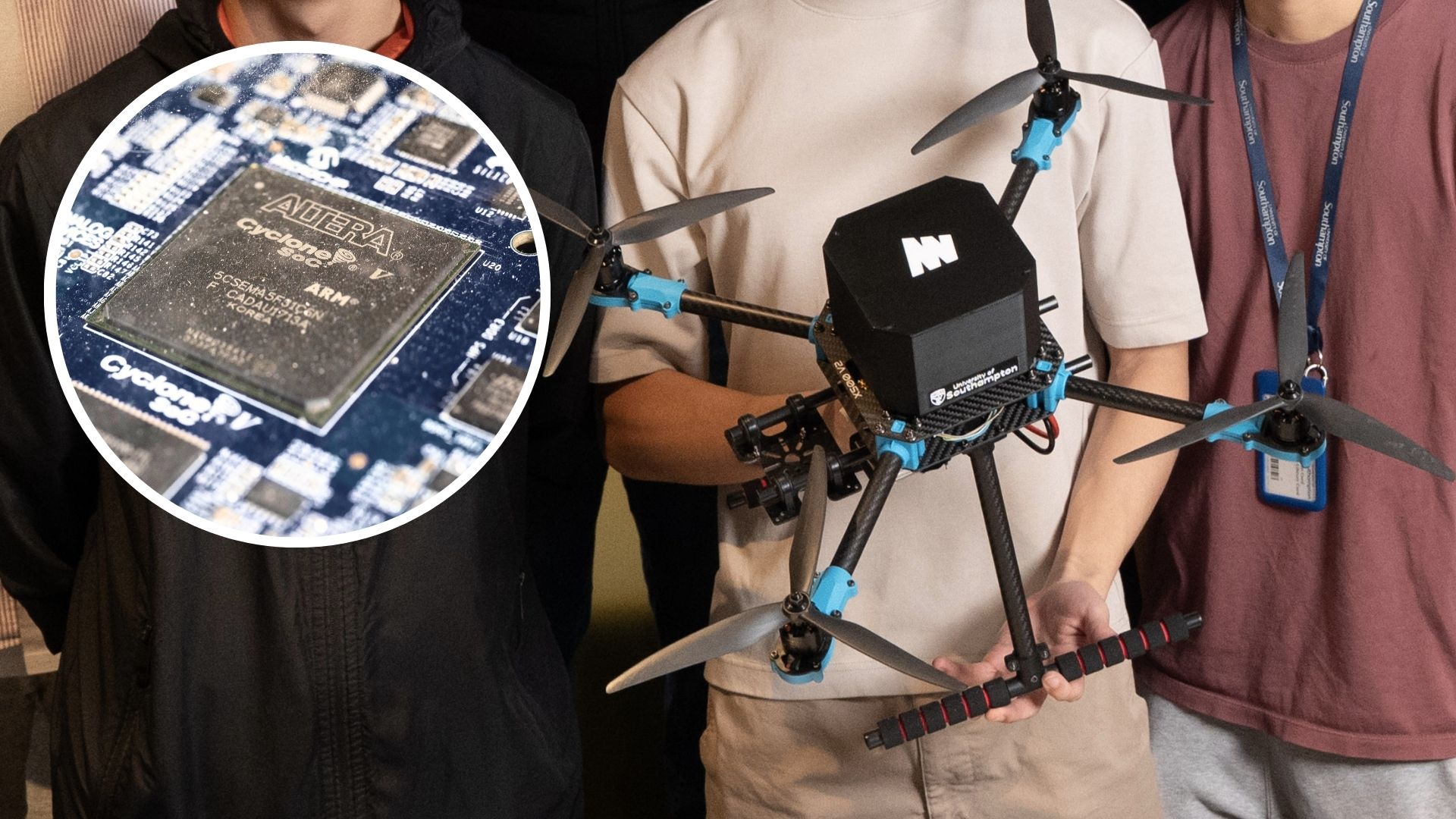
A team of student engineers from the University of Southampton has achieved a significant technological milestone. They have developed what is believed to be the world’s first blockchain-based “black box” system for drones. This innovation enables an autonomous drone to record important operational and sensor data directly onto a blockchain during flight, creating a secure and tamper-resistant record of its activities.
Improving Transparency and Trust
Similar to the flight data recorders used in aircraft, the system continuously logs information about the drone’s performance. However, instead of storing the data in a single centralized database, it distributes the information across a decentralized digital ledger, making the records far more difficult to alter or manipulate. This approach improves transparency and trust in autonomous systems that increasingly operate without direct human supervision.
“The test was a huge success,” said engineering student Yi Cherng Tan, who led the team. “It’s been fantastic to work with industry partners like Minima on cutting edge technology that could play a huge role in shaping how the internet of things and other next generation technologies progress.”
The project was carried out by a group of engineering students working with industry partners and researchers specializing in distributed systems and semiconductor technology. During a live demonstration flight, the drone successfully transmitted and recorded its operational data onto the blockchain in real time.
Overcoming Challenges
This achievement is particularly important because drones operate under demanding conditions such as vibration, motion, limited power supply, and fluctuating communication signals. Despite these challenges, the verification system continued functioning throughout the entire flight, proving that blockchain technology can reliably operate on lightweight onboard hardware used in autonomous aerial vehicles.
At the heart of the system is a compact blockchain protocol developed by the technology company Minima. Each device participating in the network runs a complete blockchain node, allowing it to independently store and verify data. Although the data remains locally stored on each device, all participants in the network can validate the records, which ensures that the information cannot be secretly modified or erased.
Decentralized Structure
This decentralized structure eliminates the need for cloud servers or centralized databases, which are often required in traditional monitoring systems. By enabling machines to create and verify their own records at the point of operation, the technology offers a new method for ensuring the reliability and accountability of autonomous systems.
New Integration Improves Performance
Another major breakthrough of the project involved running the blockchain directly inside a microprocessor system-on-chip rather than relying solely on external software. This integration significantly improved system performance and efficiency.
According to the researchers, shifting the blockchain processes closer to the hardware level resulted in performance improvements of up to 500 times and energy efficiency gains of as much as 10,000 percent compared with conventional implementations. Such improvements are crucial for devices like drones that operate with strict limitations on computing power and battery capacity, according to a press release.
“This project shows that trusted verification can move from remote servers into the hardware of autonomous machines themselves,” said Dr Ivan Ling, project supervisor at the University of Southampton.
“As intelligent systems become more common in public and industrial environments, the ability to independently prove what a machine has done will become essential for safety and public confidence.”
Until now, most systems have relied on cloud servers or central databases to record activity. That approach relies on stable connectivity and external oversight.
“Operating reliably under strict power limits and changing connectivity conditions shows that distributed verification can work in real world autonomous environments,” said Paddy Cerri, Chief Architect at Minima.
“This opens the path toward embedding secure verification into the next generation of connected devices.”
Posting Komentar untuk "UK Engineers Launch World's First Drone Blockchain Black Box"
Please Leave a wise comment, Thank you