
Trump's H-1B Visa Reversal Plan Unveiled
The H-1B Visa Controversy and the Push to Repeal Trump-Era Restrictions
A Democratic lawmaker has introduced legislation in the U.S. House of Representatives aimed at reversing new restrictions on the H-1B visa program imposed by President Donald Trump. This move highlights the ongoing debate over how the U.S. should balance its need for global talent with concerns about protecting American workers.
Why It Matters
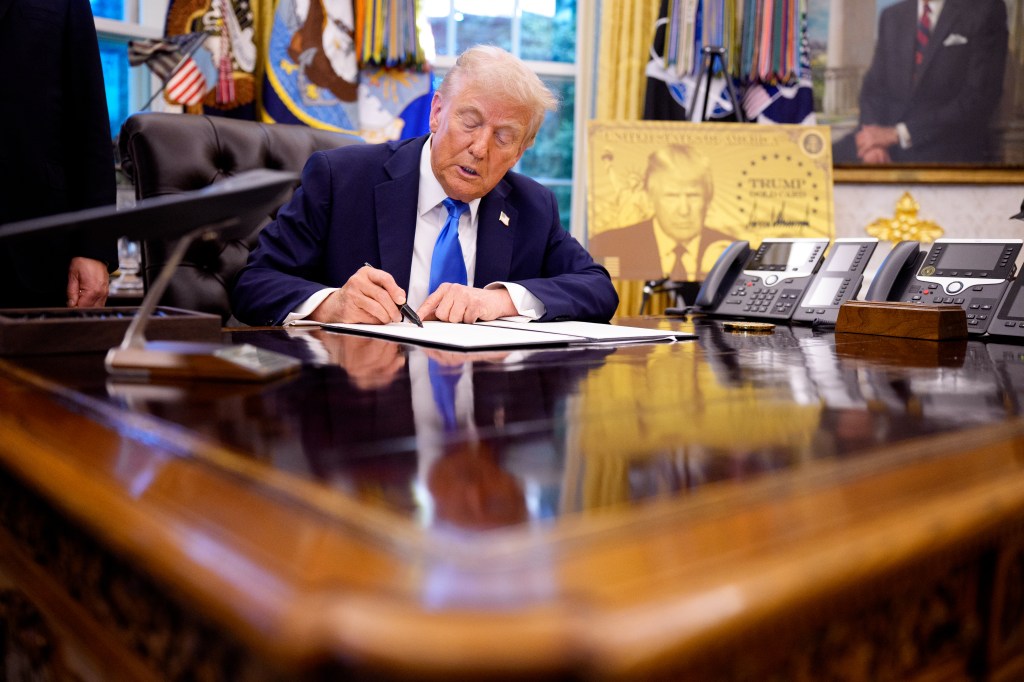
Trump’s proclamation last year added steep fees and included a one-time $100,000 charge for employers sponsoring H-1B workers, along with tougher wage requirements for companies hiring foreign professionals. Supporters of the policy argued that stricter requirements would discourage American companies from relying on foreign labor and help protect opportunities for U.S. workers. At the same time, critics say the measures could widen a talent gap, warning that there are not enough qualified Americans to fill many highly specialized roles and that limiting access to global talent could cause the United States to fall behind in key industries.
What To Know
Representative Bonnie Watson Coleman, a New Jersey Democrat, introduced the measure. Known as the Welcoming International Success Act (WISA Act), the legislation would nullify a September 2025 proclamation Trump signed that significantly tightened conditions for companies sponsoring H-1B visa holders, according to a news release.
The H-1B program allows U.S. employers to hire foreign professionals in specialized fields such as technology, engineering and medicine when qualified domestic workers are unavailable. The United States issues tens of thousands of these visas each year, and they are widely used by technology firms, universities and hospitals. The visa program, managed by U.S. Citizenship and Immigration Services, is limited by an annual cap of 65,000 regular visas, with an extra 20,000 visas reserved for applicants who have earned advanced degrees from U.S. institutions.
Watson Coleman said the steep fees created significant barriers for institutions that depend on highly skilled international employees. In announcing the proposal, the congresswoman said the restrictions had increased hiring costs for businesses and research organizations that rely on global talent.
The proposed legislation would eliminate the additional fee and reverse the wage changes introduced under the proclamation. Supporters say the move would restore previous hiring conditions and make it easier for employers to recruit skilled workers from abroad.
Watson Coleman said the U.S. is facing a growing nursing shortage driven by an aging workforce, pandemic-related burnout and restrictions on H-1B visas. She also pointed to recent limits on federal student loans for nursing degrees introduced during the Trump administration, arguing that the combination of factors had created a “perfect storm” for the health care workforce.
The fee is aimed at curbing program misuse and encouraging employers to hire higher-paid U.S. workers, according to the federal government.
An economic analysis has found that U.S. companies are saving hundreds of thousands of dollars in payroll costs for every H-1B worker they hire, raising questions about whether the visa is primarily fulfilling its purpose of attracting high-skilled talent.
The study, conducted by the National Bureau of Economic Research, examined more than 340,000 H-1B hires at for-profit companies between 2021 and 2024 and found that employers pay H-1B workers roughly 16 percent less than comparable U.S. workers with the same education, occupation, age, gender and location. Because salaries in these roles often exceed $100,000, the analysis estimates that firms save almost $100,000 over the six-year employment period permitted under the visa.
In February, a bipartisan group of 100 members of Congress urged the administration to exempt the health care sector from the $100,000 H-1B visa fee. In a letter to Homeland Security Secretary Kristi Noem, the lawmakers—led by Representatives Yvette D. Clarke, a New York Democrat, and Michael Lawler, a New York Republican—said health care providers depended on international workers to fill critical roles, including physicians, clinical laboratory staff and other specialized positions.
Some GOP lawmakers have gone beyond tweaking H-1B rules, instead introducing legislation that would end the visa program entirely. Representative Greg Steube of Florida proposed the Ending Exploitative Imported Labor Exemptions (EXILE) Act, which would phase out the H-1B visa by 2027 by reducing its annual allocations to zero if enacted.
Several Republican-led states have moved to restrict H-1B hiring at public institutions and state agencies. In Texas, Governor Greg Abbott has frozen new H-1B petitions through May 31, 2027, while Florida Governor Ron DeSantis has directed the state’s Board of Governors to suspend H-1B hiring at public universities. On March 2, the Florida Board of Governors approved a one-year ban on hiring new faculty and staff at the state’s 12 public universities through the H-1B visa program. The pause, which took effect immediately, is set to remain in place through at least January 5, 2027.
A federal appellate panel heard arguments on Monday over whether Trump’s $100,000 H-1B visa fee is a tax or a lawful exercise of presidential authority to restrict entry. The U.S. Chamber of Commerce and other challengers say the fee exceeds presidential power. Judges questioned whether its size makes it a revenue-raising tax or a regulatory restriction, while DOJ attorneys argued that the president had broad authority under the Immigration and Nationality Act. Plaintiffs’ lawyers said Congress would need to explicitly authorize such a fee and that the proclamation exceeded statutory authority. A Northern California court is considering a similar challenge.

In a polarized era, the center is dismissed as bland. At , ours is different: The Courageous Center—it’s not “both sides,” it’s sharp, challenging and alive with ideas. We follow facts, not factions. If that sounds like the kind of journalism you want to see thrive, we need you.
When you become a Member, you support a mission to keep the center strong and vibrant. Members enjoy: Ad-free browsing, exclusive content and editor conversations. Help keep the center courageous. Join today.

What People Are Saying
Democratic Representative Bonnie Watson Coleman of New Jersey said in a news release on Friday:
“Trump’s shortsighted proclamation has created significant barriers for U.S. employers, universities, hospitals, and research institutions that rely on highly-skilled professionals. The H-1B program does not replace the domestic workforce; it serves as a bridge between U.S. talent and global talent that fuels U.S. economic growth.”
Then-Representative Marjorie Taylor Greene, a Georgia Republican, wrote in November:
“I am introducing a bill to END the mass replacement of American workers by aggressively phasing out the H-1B program. Big Tech, AI giants, hospitals, and industries across the board have abused the H-1B system to cut out our own people.”
Republican Representative Greg Steube of Florida said in a news release:
“Prioritizing foreign labor over the well-being and prosperity of American citizens undermines our values and national interests.”
What Happens Next
As Republicans control both chambers of Congress, the WISA Act is unlikely to pass.
Posting Komentar untuk "Trump's H-1B Visa Reversal Plan Unveiled"
Please Leave a wise comment, Thank you