
Starlink's V2 Satellites Deliver 5G Speeds from Space with 100x Data Density
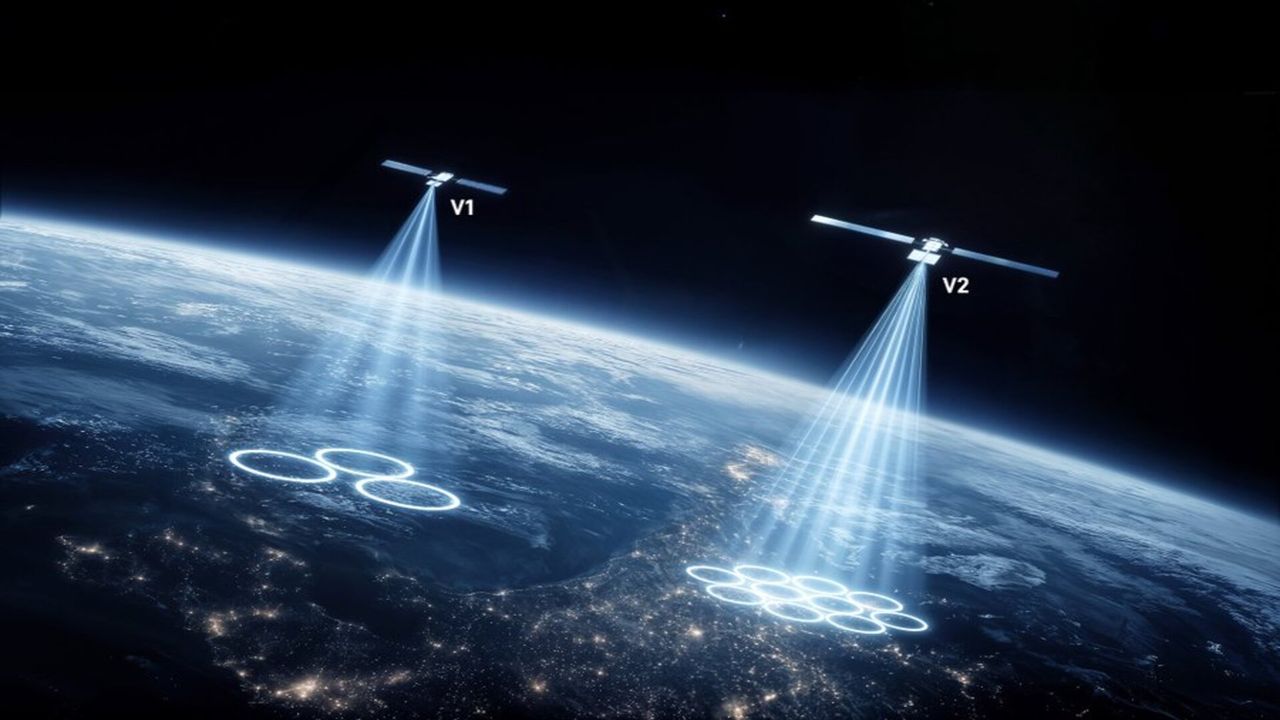
Starlink V2 Satellites: A New Era of Direct Smartphone Connectivity
Starlink, the satellite internet service developed by SpaceX, is set to revolutionize how users access mobile connectivity. The company has announced its next-generation V2 satellites, which are designed to connect ordinary smartphones directly without requiring additional equipment. This marks a significant shift in the approach to satellite-based communication, aiming to provide seamless and uninterrupted mobile service across both terrestrial and satellite coverage.
Enhanced Performance and Capabilities
Traditionally, satellite connectivity services have focused more on expanding coverage rather than achieving high-speed performance. However, Starlink’s V2 satellites aim to change this narrative by delivering “5G speeds from space.” According to the company, these new satellites will offer "100x the data density" compared to the current V1 generation. This improvement could potentially allow for peak speeds of up to 150 Mbps per user, making it a viable alternative for data-intensive tasks.
Currently, Starlink's service is limited to light data usage and basic text messaging. The V2 upgrade is expected to significantly enhance performance capabilities, offering users a more robust and reliable connection.
Compatibility with Existing Devices
One of the most notable features of the V2 satellites is their compatibility with hundreds of existing LTE phones. This means that ordinary smartphones can connect directly to the Starlink network without the need for specialized hardware. The system functions similarly to cellular towers in orbit, enabling compatible phones to maintain connectivity without additional antennas or equipment.
This development could be particularly beneficial in regions where terrestrial networks are sparse or unreliable. By bridging the gap between traditional mobile networks and satellite-based services, Starlink aims to provide a more consistent and accessible connectivity solution.
Deployment and Future Expectations
SpaceX plans to launch up to 15,000 of these V2 satellites to expand coverage and increase capacity. Early testing of the enhanced service is expected around early 2027. Some V2 Mini satellites are already being deployed to serve as interim solutions during the transition period.
The deployment of larger satellites will play a crucial role in determining how quickly users can access the full benefits of the V2 network. Additionally, Starlink is exploring partnerships with terrestrial operators, such as T-Mobile in the United States, to enable seamless transitions between satellite and ground networks. This collaboration could help reduce service interruptions and ensure a more stable user experience.
Commercial Rollout and User Experience
The satellite-to-phone service, previously known as Direct to Cell and now branded as Starlink Mobile, began its commercial rollout in mid-2025 across several regions. It offers basic connectivity in areas where terrestrial networks are limited. The upgraded V2 satellites are expected to improve bandwidth and overall user experience.
However, the actual impact of the deployment remains to be seen. While Starlink presents promising figures, the realization of these improvements depends on achieving full operational capacity with the larger constellation. This leaves some uncertainty about how quickly users will experience the promised 5G speeds and higher data density in practice.
Conclusion
As Starlink continues to push the boundaries of satellite technology, the V2 satellites represent a major step forward in providing direct smartphone connectivity. With the potential for faster speeds, broader coverage, and improved reliability, the future of mobile communication looks increasingly connected—both on the ground and in space.
Posting Komentar untuk "Starlink's V2 Satellites Deliver 5G Speeds from Space with 100x Data Density"
Please Leave a wise comment, Thank you