
Rydberg Atoms and Quantum Light Spark New Era
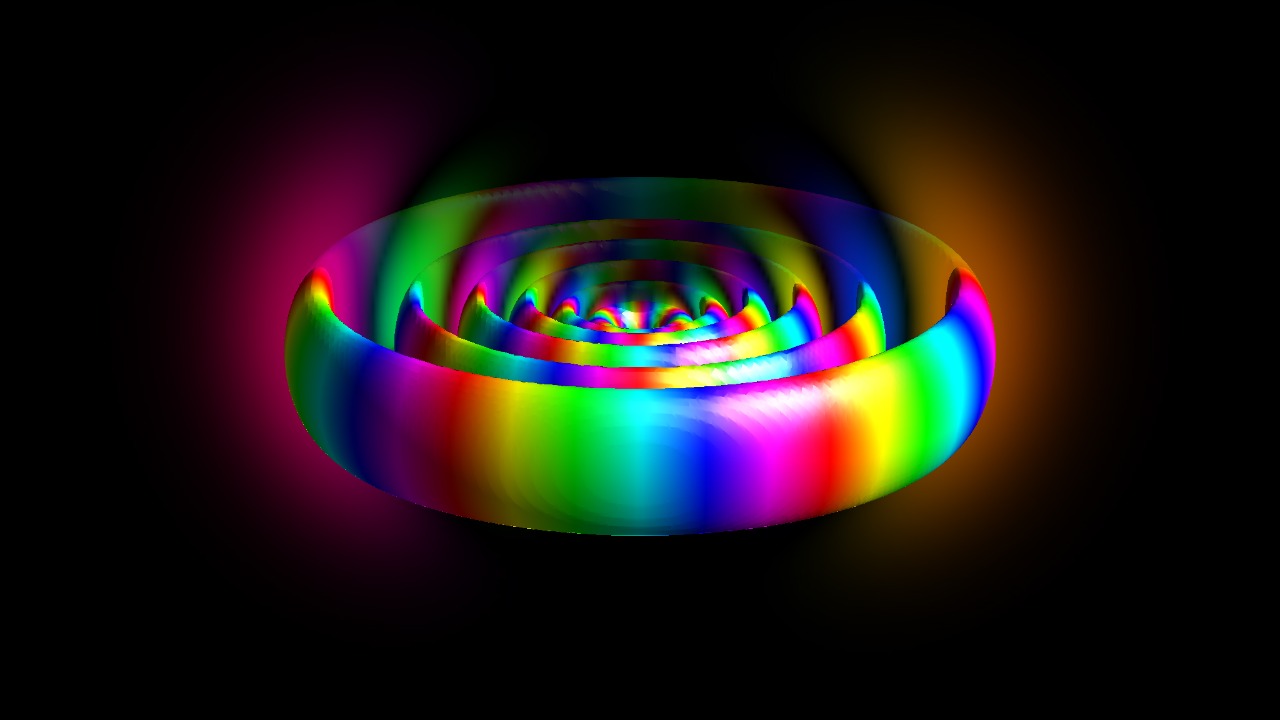
Understanding the Superradiant Clock Phase
Researchers from Chongqing University and Chongqing Normal University have introduced a groundbreaking theoretical prediction of a new quantum phase of matter known as the superradiant clock (SRC) phase. This phase arises when highly excited Rydberg atoms, arranged on a triangular lattice, interact with quantized light within an optical cavity. The findings, based on large-scale quantum Monte Carlo calculations, suggest a regime where collective atomic synchronization and coherent photon emission coexist. If validated experimentally, this phase could revolutionize how scientists approach stable timekeeping at the quantum level and the development of advanced quantum simulators.
What Makes the SRC Phase Unique?
Most quantum phases typically settle into static configurations of particles or fields. However, time crystals broke this norm by exhibiting patterns that repeat in time rather than space, showcasing spontaneous time-translation symmetry breaking. The SRC phase takes this concept further by integrating persistent temporal oscillations—characteristic of time-crystalline behavior—with superradiant light emission inside a cavity. In the proposed setup, atoms collectively emit photons in sync while their internal states function like a clock, all without an external periodic drive.
The key to this phenomenon lies in geometric frustration. When atoms are placed on a triangular lattice, their competing interactions cannot all be satisfied simultaneously, resulting in a vast number of nearly equivalent ground states. According to senior author Chen Zhang, "The SRC phase is also a quantum phase generated by the OBD mechanism, meaning quantum fluctuations lift the macroscopic degeneracy, resulting in coherent light inside the cavity." The OBD mechanism, or order-by-disorder, involves random quantum fluctuations selecting an ordered state from a sea of possibilities. This selection, mediated by the cavity’s quantized photonic mode, gives rise to the synchronized clock-like behavior.
Frustration, Cavities, and All-to-All Coupling
The simulated setup places Rydberg atoms—atoms excited to very high energy levels with exaggerated electromagnetic properties—at the vertices of a triangular array within an optical cavity. A quantized photonic mode bouncing between the cavity mirrors facilitates all-to-all interactions among the atoms, meaning each atom effectively communicates with every other atom through the shared light field. This long-range coupling competes directly with the short-range Rydberg interactions that create frustration on the triangular lattice.
The researchers' numerical simulations, conducted using quantum Monte Carlo methods, produced a detailed phase diagram showing that the SRC phase emerges near half-filling of the atomic array. Half-filling refers to a regime where roughly half the lattice sites are occupied by excited atoms. At this density, the balance between frustration and cavity-mediated coupling reaches an optimal point, leading the system to spontaneously organize into the clock phase. Moving too far from half-filling results in other phases, such as conventional superradiant or crystalline states, taking over.
How the SRC Phase Differs from Earlier Time Crystals
Rydberg atoms have already been used to study time-crystalline phenomena, but prior demonstrations relied on different mechanisms. For instance, a team reported observing dissipative time-crystalline order in a room-temperature Rydberg gas, evidenced by persistent oscillations in photon transmission. That system depended on dissipation—the controlled loss of energy to the environment—to stabilize its temporal pattern. Another study explored discrete-time symmetry breaking in Floquet-driven Rydberg atoms, where an external periodic drive was essential for producing time-crystal behavior.
The SRC phase predicted by the Chongqing teams stands apart in both respects. It does not require an external periodic drive, nor does it rely on dissipation as the ordering mechanism. Instead, the authors argue that the combination of geometric frustration and cavity quantum electrodynamics can produce temporal order from near-equilibrium physics. This distinction is crucial because drive-dependent and dissipation-dependent phases tend to be fragile: turning off the drive or changing the loss rate can cause the time-crystal behavior to vanish. An equilibrium-born clock phase, if realized in hardware, could prove significantly more stable.
Building on a Decade of Superradiant Lattice Physics
The new prediction did not emerge in isolation. A foundational 2012 study introduced the concept of a superradiant solid, where superradiance coexists with crystalline order in a lattice of Rydberg atoms coupled to a cavity. That work, supported by large-scale quantum Monte Carlo calculations, showed that atoms could simultaneously organize spatially and emit light collectively. The SRC phase extends this idea by adding a temporal dimension: the atoms not only form a spatial pattern but also oscillate coherently in time.
On the experimental front, a peer-reviewed study documented at NIST described a dissipation-induced transition in a strontium cavity-QED system. That experiment confirmed that superradiant phase transitions can be triggered and controlled in real laboratory settings, lending credibility to the theoretical framework used by the Chongqing researchers. Strontium and Rydberg systems differ in detail, but both rely on ensembles of atoms strongly coupled to a single optical mode, making them natural platforms for exploring SRC-like behavior.
Why Rydberg Atoms and Cavities Are a Powerful Combination
Rydberg atoms are valuable for quantum simulation due to their exaggerated electric dipole moments, which generate strong, tunable interactions over micrometer distances. In a triangular lattice, these interactions create the frustration that underpins the SRC phase. Embedding the lattice in an optical cavity adds a second layer of control: the cavity mode can be tuned in frequency and coupling strength, effectively adjusting the balance between local Rydberg forces and global light-mediated interactions.
This dual-control architecture allows theorists to explore a rich landscape of phases. In regimes where cavity coupling dominates, the system tends toward uniform superradiance, with all atoms emitting in phase. When Rydberg interactions dominate, spatial crystals or spin-density waves can form. The SRC phase appears in the intermediate regime, where neither tendency fully wins, and the compromise is a temporally modulated, spatially ordered, and superradiant state. That complexity is precisely what makes the phase both challenging to realize and scientifically intriguing.
Implications for Quantum Timekeeping and Simulation
One of the most exciting aspects of the SRC phase is its potential relevance to quantum timekeeping. Because the phase features spontaneous, coherent oscillations tied to the collective state of many atoms, it could serve as a kind of self-organized oscillator. Unlike conventional atomic clocks, which rely on externally driven transitions, an SRC-based device might harness intrinsic dynamics that are less sensitive to certain kinds of noise.
More broadly, the phase enriches the toolbox of quantum simulation. Many-body systems that combine frustration, long-range interactions, and coupling to quantized light are believed to host exotic phenomena that are difficult to capture with classical computation. Demonstrating SRC behavior in the lab would provide a concrete, tunable example of such a system, enabling tests of theoretical ideas about non-equilibrium order, emergent synchronization, and the interplay between matter and light.
The Role of Open Preprint Servers
Theoretical advances like the SRC prediction often appear first on preprint platforms before formal journal publication. Services such as arXiv, supported by a network of institutional member organizations, allow researchers to share results quickly with the global community. This rapid dissemination accelerates feedback, replication attempts, and follow-up work.
Maintaining such infrastructure requires ongoing support; arXiv notes it is supported by member institutions and also accepts donations to help keep the service widely accessible. For fast-moving fields like quantum many-body physics, where predictions such as the superradiant clock phase can inspire rapid experimental efforts worldwide, the existence of robust, open preprint archives has become an essential part of the scientific ecosystem.
For now, the SRC phase remains a theoretical construct, albeit one grounded in sophisticated numerical simulations and informed by a decade of progress in cavity-QED experiments. As laboratories refine their control over Rydberg arrays and optical cavities, the conditions required for this exotic phase may come within reach. If and when the superradiant clock is finally observed, it will mark not just the discovery of a new phase of matter, but also a milestone in our ability to engineer and exploit collective quantum behavior in space and time.
Posting Komentar untuk "Rydberg Atoms and Quantum Light Spark New Era"
Please Leave a wise comment, Thank you