
Hard Data Debunks Myth: Wind Farms Don't Kill Birds
What the Numbers Actually Show
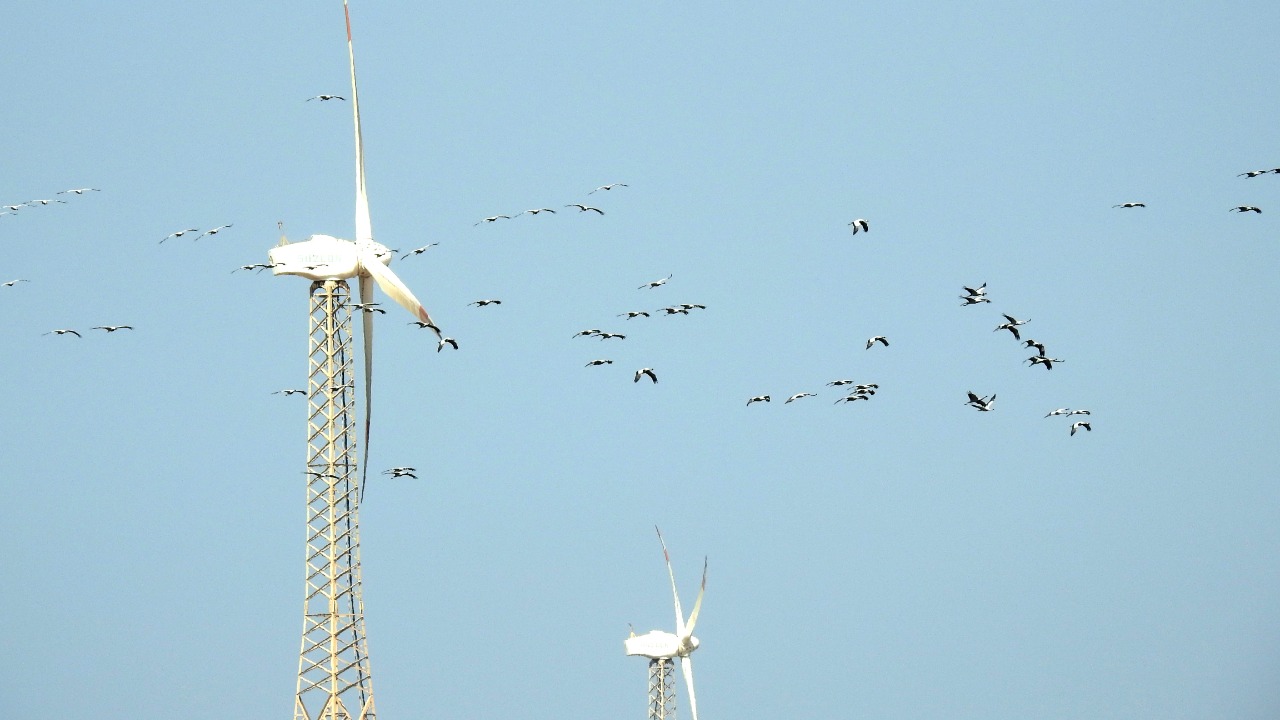
Wind turbines kill birds. That much is true. But the claim that wind farms operate as mass bird-killing machines collapses under the weight of peer-reviewed evidence. Multiple federal studies and independent research papers show that turbine collisions account for a small sliver of the billions of avian deaths caused each year by cats, buildings, vehicles, and power lines across the United States.
A peer-reviewed analysis published in Biological Conservation compiled publicly accessible fatality studies from wind facilities across the country and, using a rigorous statistical framework, estimated annual U.S. bird collisions while correlating mortality rates with specific facility and turbine characteristics. That same body of research found wind-related bird deaths numbering in the hundreds of thousands per year, a figure that sounds alarming in isolation but shrinks dramatically when placed beside other human-caused threats.
The American Bird Conservancy estimate for 2021 put U.S. turbine collisions at about 1.17 million birds, reflecting a much larger installed fleet than earlier studies captured. Even that higher figure, though, represents a fraction of total anthropogenic bird mortality and needs to be understood in the context of both population sizes and competing hazards.
A foundational technical report housed in the Pacific Northwest National Laboratory’s Tethys database synthesized dozens of field studies and provided explicit numeric ranges for avian collision mortality from buildings, vehicles, power lines, and communication towers. Those categories each dwarf wind energy’s contribution. The report also established a per-turbine fatality average derived from early U.S. wind projects, giving researchers a baseline that has held up as newer studies have refined the picture and as turbine technology has evolved.
Cats, Glass, and Cars Kill Far More
The single largest human-linked threat to birds in the United States is not a spinning blade. It is the domestic cat. A peer-reviewed study in Nature Communications produced a national estimate of bird mortality from free-ranging domestic cats in the low billions annually, with feral and unowned cats responsible for the majority of kills. That work made clear that other anthropogenic sources dwarf wind-turbine mortality by orders of magnitude.
Buildings kill hundreds of millions of birds annually through window strikes, particularly during migration when night lighting and reflective glass confuse birds navigating by stars and landscape cues. Vehicles and power lines add millions more deaths, often concentrated along flyways and in open-country habitats where birds forage near roads and transmission corridors.
Against that backdrop, the MIT Climate Portal has emphasized that turbine collisions “represent a tiny fraction” of total birds killed annually by human activity. This is not a case of environmentalists minimizing a real problem; it is a matter of scale. The threats that receive the least public attention (roaming cats, everyday glass, and traffic) cause the most damage.
A separate synthesis by federal scientists examined why different estimates of wind-facility bird fatalities diverge. Variations in search protocols, carcass detection, scavenger removal rates, and turbine sizes all affect final tallies. Methodological choices can push estimates up or down, but even the highest credible ranges leave wind energy as a minor contributor to overall avian mortality compared to cats, structures, and vehicles.
Why the Myth Persists
The “guillotine” framing endures partly because a dead eagle at the base of a turbine is visceral and easy to photograph, while the billions of songbirds killed by cats and glass go largely unseen. A single high-profile carcass can dominate news coverage and social media in a way that diffuse, everyday mortality never does. Political opponents of renewable energy have amplified isolated raptor deaths into a broad indictment of wind power, often without citing the comparative data that puts those deaths in context.
There is also a legitimate concern buried inside the exaggeration. Certain raptor species, including golden eagles and some hawks, face disproportionate risk at poorly sited facilities, especially where turbines intersect with predictable flight paths or foraging areas. That risk is real and demands careful management. But conflating site-specific raptor concerns with a blanket claim that wind farms are devastating bird populations misrepresents the science. The data consistently show that well-sited, well-managed wind projects pose a limited threat to overall bird populations when compared with other human activities.
Engineering Fixes That Cut Collision Rates
The story does not end with counting dead birds. Researchers have tested practical fixes that sharply reduce collision risk. A peer-reviewed field experiment published in Ecology and Evolution tested a simple visibility treatment in which one blade on each turbine was painted black. The altered rotors were more conspicuous to approaching birds, and collision rates dropped substantially at the test site, suggesting that relatively low-cost design tweaks can deliver meaningful reductions in mortality.
Technology-based deterrents are also under active study. Radar and camera systems can detect approaching flocks or large raptors and trigger temporary turbine shutdowns, a strategy already being deployed at some facilities with known eagle activity. Acoustic and ultraviolet cues tailored to bird sensory systems are being evaluated as additional tools to steer birds away from high-risk zones around towers and blades.
Federal guidelines from the U.S. Fish and Wildlife Service already detail how wind projects are expected to avoid and minimize impacts on birds. These land-based guidelines outline pre-construction surveys, habitat assessments, and post-construction monitoring designed to detect and respond to unexpected mortality patterns. While the framework is voluntary and enforcement gaps remain, it provides a structured pathway for developers to identify sensitive habitats, adjust turbine layouts, and commit to adaptive management if monitoring reveals higher-than-expected impacts.
Recent research has expanded the evidence base beyond North American grasslands and ridgelines. A study published in June 2025 examined turbine impacts in a tropical desert and characterized mortality in an environment important for both renewable energy development and avian biodiversity. Findings from diverse geographies reinforce the principle that responsible siting, combined with targeted mitigation, can keep impacts manageable even in ecologically sensitive areas.
The Bigger Threat Wind Power Helps Avoid
Critics often focus narrowly on turbine collisions without weighing what wind power displaces. Fossil fuel combustion drives climate change, which in turn alters habitats, shifts migration timing, intensifies storms, and exacerbates drought and wildfire, all of which threaten birds at a planetary scale. Air pollution from coal and oil also harms both birds and people directly through toxic exposure and ecosystem degradation.
By generating electricity without emitting carbon dioxide or conventional air pollutants, wind projects reduce the need for fossil fuel generation and its associated impacts. Analyses of power-sector emissions show that each megawatt-hour of wind generation avoids a measurable quantity of greenhouse gases and other pollutants. Over the multi-decade lifespan of a wind farm, those avoided emissions translate into fewer climate-driven habitat losses, less acid deposition, and reduced particulate pollution, benefits that accrue to bird populations as well as human communities.
Federal agencies have assembled extensive background materials on wildlife impacts and energy development to help put these trade-offs in perspective. Publications available through the U.S. Geological Survey store include technical reports and maps that inform siting decisions, while the agency’s online question portal fields public inquiries about how energy infrastructure interacts with ecosystems. Together, these resources underscore a central point: no energy source is impact-free, but some pathways clearly offer lower overall risk to biodiversity than others.
When the full picture is considered, wind turbines emerge not as avian scourges but as one component of a broader transition away from fuels that pose far greater dangers to birds and the habitats they depend on. Reducing unnecessary turbine collisions remains an important conservation goal, especially for vulnerable raptor populations and in migration bottlenecks. Yet the evidence shows that with careful siting, robust monitoring, and straightforward engineering fixes, wind energy’s direct toll on birds can be kept relatively small, and far smaller than the cascading harms of an unchecked fossil-fueled climate.
Posting Komentar untuk "Hard Data Debunks Myth: Wind Farms Don't Kill Birds"
Please Leave a wise comment, Thank you