
China uncovers remarkable clues to moon's greatest mystery
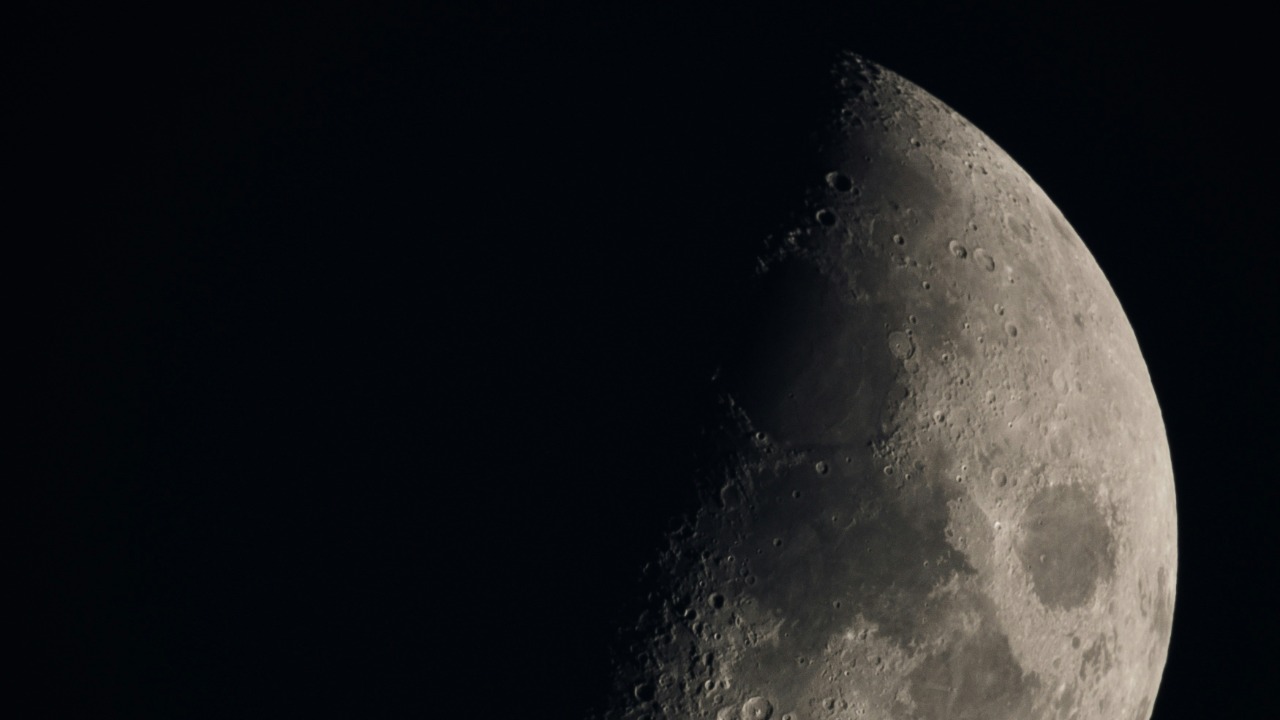
Chinese Scientists Uncover New Insights from Lunar Soil
Chinese scientists have made groundbreaking discoveries using just five grams of lunar soil collected from the moon’s far side. These findings, derived from the Chang’e-6 mission, offer a new perspective on the moon's early history and the differences between its two hemispheres.
A Bone-Dry Mantle Beneath the Far Side
One of the most significant revelations is that the mantle beneath the moon's far side is remarkably dry. This finding challenges previous assumptions about the distribution of water and other volatile compounds within the moon. The Chang’e-5 mission, which sampled the near side in 2020, suggested that the mantle contained roughly 1 to 5 micrograms of water per gram. However, the Chang’e-6 data show that the far side’s mantle contains only about 1 to 1.5 micrograms of water per gram.
This low water content has important implications for understanding the moon’s formation. It suggests that the moon did not evenly retain volatiles during its early history. The lack of water in the far side’s mantle helps explain why volcanic eruptions there produced fewer dark basaltic plains, known as maria, compared to the Earth-facing hemisphere.
Interestingly, the surface and shallow subsurface of the far side contain more water than the near side. This difference is attributed to factors such as the abundance of regolith glass, particle size, sampling depth, and the time of day when samples were taken. These findings are crucial for future efforts to extract water resources from the moon, as they indicate that accessible water may be limited to the uppermost layers of soil.
Two Giant Impacts, 90 Million Years Apart
The Chang’e-6 mission also provided insights into the moon’s impact history. The South Pole-Aitken basin, the largest confirmed impact structure in the solar system, was dated to approximately 4.25 billion years ago based on zircon crystals found in the returned soil. Another study focused on impact-melt clasts and found that they date back to about 4.16 billion years ago, roughly 90 million years after the South Pole-Aitken collision.
These findings suggest that the moon experienced a prolonged period of intense bombardment rather than a single spike. This challenges existing models that compress the heaviest cratering into a narrow window and highlights the moon’s role in preserving a more extended record of impact events.
Meteorite Debris and Clues to Earth’s Water
Among the unexpected findings, researchers identified meteorite debris in the Chang’e-6 samples. These fragments provide valuable information about the types of objects that impacted the Earth-moon system during its early history. By studying these meteorites, scientists can better understand how water and other volatiles were delivered to the moon and Earth.
The isotopic fingerprints of these grains could help link specific regions of the early solar system to Earth’s eventual oceans, offering insights into how our planet became habitable.
Iron Oxide Crystals and Impact-Driven Chemistry
Another notable discovery is the presence of micron-sized crystals of hematite and maghemite in the Chang’e-6 soil. These iron oxide minerals suggest an impact-related oxidation mechanism. The extreme heat and pressure from meteorite strikes can produce oxidized iron minerals even in the moon’s nearly oxygen-free environment.
This mechanism explains localized patches of oxidized material observed on the lunar surface and underscores how energetic impacts can drive complex chemistry without requiring a thick atmosphere or abundant surface water.
Building a Global Picture of the Moon
The Chang’e-6 mission marks a significant technical achievement, as it is the first time any nation has brought back material from the moon’s far side. The findings from this mission add new pieces to the puzzle of the moon’s early history, revealing a world shaped by uneven internal chemistry and prolonged external bombardment.
Future missions, both robotic and crewed, are likely to build on this foundation. Additional samples from different far-side basins could test whether the low mantle water content is truly global or varies regionally. More precise dating of impact melts might further refine the timeline of bombardment and reveal changes in the orbits of giant planets or shifts in asteroid populations.
For now, the Chang’e-6 samples have transformed scientists’ view of the hidden hemisphere. By tying together deep-interior composition, surface processes, and the scars of ancient collisions, they show that the far side is not just a mirror image of the near side turned away from Earth, but a distinct archive of the moon’s earliest and most violent chapters.
Posting Komentar untuk "China uncovers remarkable clues to moon's greatest mystery"
Please Leave a wise comment, Thank you