
5 Key Insights from Nvidia's Jensen Huang on the Future of AI
The Vision of AI from a Tech Leader
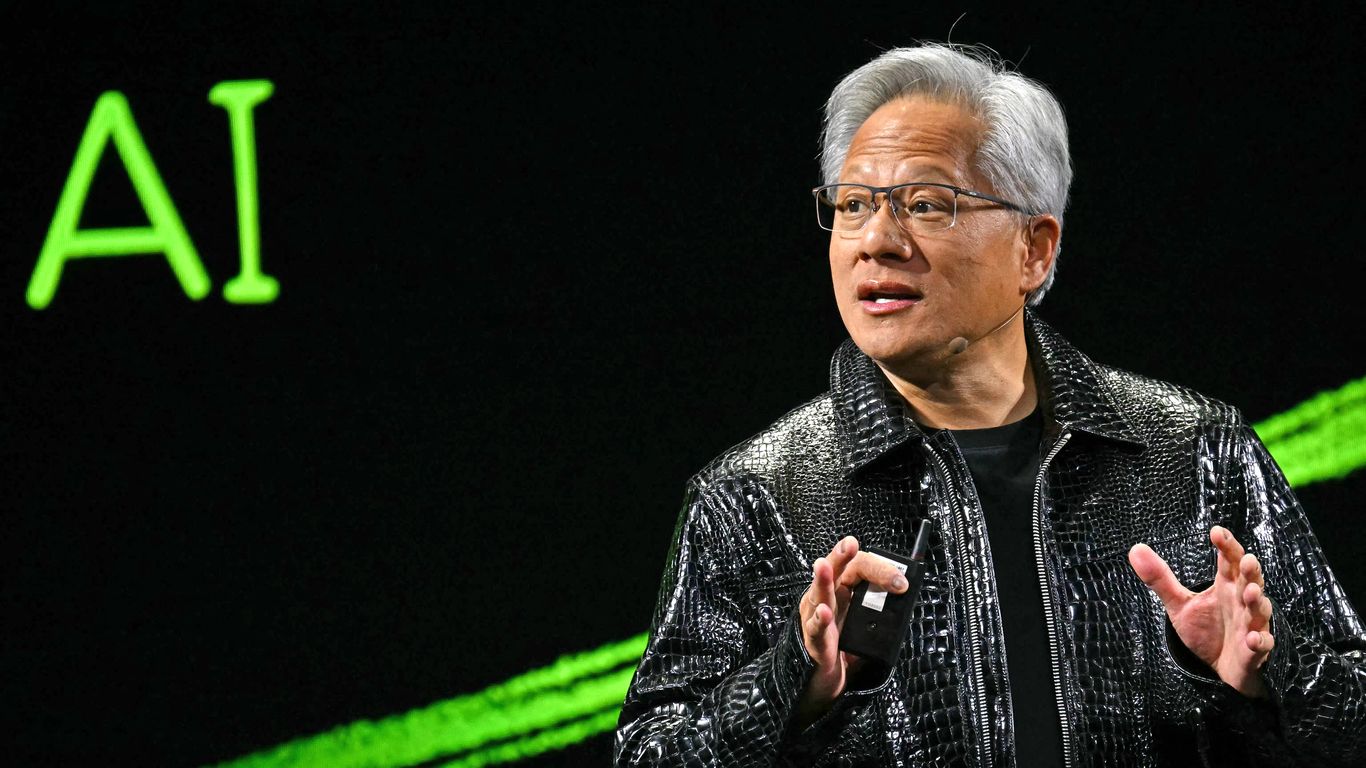
In a recent blog post, Jensen Huang, the CEO of Nvidia, outlined his thoughts on the future of artificial intelligence. He emphasized that decisions about the pace of AI development, access to the technology, and its governance will shape its legacy. This is significant because Huang, whose company plays a crucial role in the AI revolution, rarely shares detailed insights on the broader implications of this technology. His essay offers a rare glimpse into his perspective.
The Big Picture: A Long Buildout Ahead
Huang suggests that the current phase of chip demand, expansion, and hiring is just the beginning of what he refers to as a long-term buildout. He describes AI as one of the most powerful forces shaping the world today, not as a simple application or a single model but as essential infrastructure. According to him, every company and every country will eventually engage with AI.
AI vs. Traditional Software
Huang made a compelling case for how AI differs from traditional software. While traditional software operates based on pre-written rules, AI systems generate answers in real time based on context. Each response is newly created and depends on the input provided. This is not about retrieving stored instructions but rather about software reasoning and generating intelligence on demand.
The Job Creation Potential of AI
Huang argues that AI has the potential to create new kinds of jobs, particularly in infrastructure and skilled trades. As AI takes over routine tasks, companies can serve more customers and expand their operations. This dynamic, he says, ultimately drives hiring. He emphasizes that "productivity creates capacity. Capacity creates growth."
Reality Check: The Labor Market Debate
Despite these optimistic views, there is ongoing debate about how AI impacts the labor market. Some argue that AI speeds up work and makes people busier. Huang has previously suggested that "everybody's jobs will be different" due to AI. He also famously stated at the Milken conference in 2025, "You're not going to lose your job to an AI, but you're going to lose your job to somebody who uses AI."
Understanding AI Through a Five-Layer Framework
Huang explains AI through a "five-layer stack" framework: Energy → chips → infrastructure → models → applications. He notes that every successful application pulls on every layer beneath it, all the way down to the power plant that keeps it alive. This framework was first introduced at the World Economic Forum in Davos in January.
The Need for Massive Investment
Huang highlights that the AI boom is still in its early stages and will require trillions of dollars in additional investment. He states that "we have only just begun this buildout," referring to data centers and infrastructure. He adds that "we are a few hundred billion dollars into it. Trillions of dollars of infrastructure still need to be built."
The Early Stages of the AI Revolution
The bottom line, according to Huang, is that "we are still early. Much of the infrastructure does not yet exist. Much of the workforce has not yet been trained. Much of the opportunity has not yet been realized. But the direction is clear."
Going Deeper: Insights from a Tech Leader
Huang has also shared his thoughts with Joe Rogan, stating that nobody "really knows" AI's endgame. This underscores the uncertainty and potential of this rapidly evolving field.
By examining these perspectives, it becomes clear that AI is not just a technological advancement but a transformative force that will reshape industries, economies, and societies. The journey ahead is just beginning, and the challenges and opportunities it presents are vast.
Posting Komentar untuk "5 Key Insights from Nvidia's Jensen Huang on the Future of AI"
Please Leave a wise comment, Thank you