
5 Colors That Make You Look Older—Stop Wearing Them

Why does a color that looked good on you at 40 now seem off at 55? After the age of 50, the cells responsible for producing melanin decrease, resulting in less pigment in your skin, which previously provided a warm tone. This pigmentation used to serve as a barrier, absorbing the light that clothing reflects back toward your face, allowing you to wear a broader range of colors because your skin maintained its own balance. Now that this barrier has become thinner, the colors you select are more important, so choosing the most suitable shades for your skin tone requires greater attention.
However, this also benefits you. When you wear an item that aligns with your undertone, the reflected light enhances your warmth rather than diminishing it. It's not a solution or a shortcut, but simply what occurs when the wavelengths harmonize with your skin tone instead of clashing with it.
Why Your Skin Reacts Differently to Color Once You're Over 50
In 1979, dermatologist Barbara Gilchrest and her colleagues at Boston University examined the changes that occur in skin pigment cells as individuals grow older. They collected skin samples from donors ranging in age from 28 to 80.What they found were melanocytes, the cells responsible for producing melanin, decreasing by 6 to 8% each decade after the age of 30.
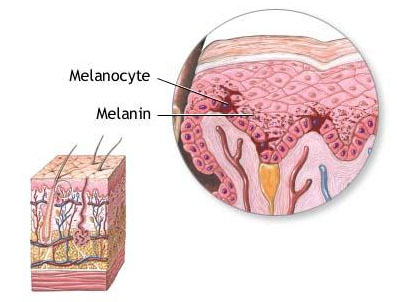
By the age of 50, you may have lost between 12 and 24% of the cells that contribute to your skin's warmth and color. This decline occurs gradually, which is why you might not notice it until it becomes apparent. The pigment that once provided a natural warmth to your face has been diminishing over time, and eventually, this change becomes noticeable.
Your overall skin tone appears lighter or develops a grayish hue that wasn't present before. The skin becomes thinner and more see-through, allowing blood vessels to become visible in areas where they weren't noticeable before. The subtle blueish tint around your eyes or along your jawline is due to blood becoming visible through the thinner skin. This can give you a tired appearance even if you've had eight hours of sleep and feel completely well. These are not imperfections. They are simply the result of having less pigment and less thickness between the surface of the skin and what lies underneath.
Sun exposure introduces an additional factor. UV damage builds up over many years and eventually results in irregular pigmentation. Darker patches may appear in certain areas while other regions lose color completely. At age 30, your skin can typically handle sun exposure and spread pigment evenly. By 50, the system responsible for this process has slowed, and the cumulative impact of every beach trip and afternoon spent outdoors becomes visible on your face, hands, and chest. You end up with a patchy appearance that wasn't present when your melanin production was more active and consistent.
All of this alters the way color affects you. Anything you wear close to your face has a greater impact on how your skin looks. The incorrect shade can bring out a yellowish tone you weren't aware of or make the dark circles under your eyes appear more pronounced. The correct shade has the opposite effect, restoring warmth and balancing out any unevenness.
Justine Glaser, a licensed color expert who operates Colors by Midnight in Los Angeles, refers to this change as exiting what she terms the peak pigmentation period. In aninterview with GlamShe mentioned that this period typically begins between the ages of 18 and 20, following puberty, and ends around 45 to 50 when gray hair usually appears. Once this phase is over, the colors that previously worked for you may require some modifications. Your core seasonal classification remains the same. Someone who was identified as a spring at 25 will still be a spring at 60. However, the particular hues within your color palette might need to transition to more muted or lighter tones. This is because the vibrancy and clarity of your natural coloring tend to diminish along with other changes over time.
Hormones also play a role in this. In 2016, scientists from the University of Pennsylvania investigated why skin color frequently changes during pregnancy and menopause. Their results,published in the journal eLife, demonstrated that estrogen directly enhances melanin production in skin cells. In contrast, progesterone has the opposite impact. When estrogen levels are elevated, as they typically are during a woman's reproductive years, melanocytes generate more pigment. However, when estrogen decreases after menopause, this production diminishes. This implies that the warm or cool nature of your undertone can actually change as your hormone levels fluctuate. Since the amount of pigment in your skin has altered, colors you once wore with confidence may now seem mismatched, and it's not due to your imagination or the lighting. Your undertone might have genuinely shifted, and your clothing collection hasn't adjusted yet.
The same awareness that makes incorrect colors more challenging also enhances the impact of correct ones. Once you grasp what's truly happening with your skin, you can stop feeling guilty about appearing tired in specific outfits and begin selecting hues that complement your current appearance instead of the one you had at 35.
The Principles of Color Harmony
The notion that specific colors complement certain individuals goes beyond mere fashion tips found in magazines. Scientists from the University of St Andrews aimed to investigate if clothing color choices adhere to discernible patterns linked to skin tone. Their findings supported what style experts have been asserting for many years.
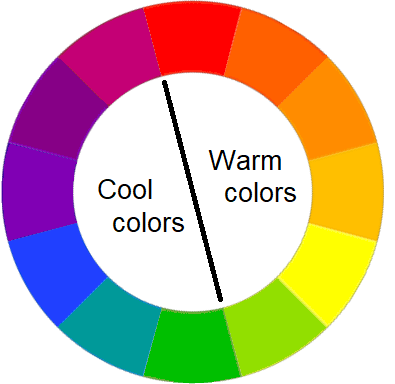
In a 2021 research paper featured in the journal i-Perception, Professor David Perrett and his colleagues presented participants with images of women's faces and requested them to modify the color of virtual clothing to determine the most appealing combination. Participants had access to the full range of colors available. All shades at every level of saturation and brightness were accessible. Therefore, there were no restrictions. Even with such a wide selection, participants repeatedly preferred blues and orange-reds, and 75% reached a consensus on which colors complemented specific faces.
Scientists assessed skin tone objectively through colorimetry, a method that measures the hue, intensity, and lightness of the skin. Faces with lighter, cool-toned complexions were paired with blue shades. In contrast, faces with warmer, more sun-exposed skin were associated with orange and red colors. This preference was consistent among various participants. This indicates that it is not merely individual taste but a more stable pattern in how people interpret facial features alongside color.
Perrett's group suggested that the preference could be linked to an unconscious connection between climate and color. Cool blue tones suggest northern regions with lighter-skinned people, while warm tones indicate southern areas with darker skin. Regardless of the psychological basis, the practical implication is more important. When the undertone of your clothing aligns with your skin's undertone, it is seen as appealing. This isn't due to fashion guidelines, but rather how the visual system interprets the combination.
This balance has a physical foundation. When you wear an item of clothing in a specific color, the material absorbs some light wavelengths and reflects others. These reflected wavelengths do not only reach other people's eyes. They also hit your skin and produce a secondary color effect. If the reflected light matches your natural undertone, it amplifies what is already present. If it conflicts, it creates a rivalry between the fabric's reflected color and your skin's natural hue, resulting in your face appearing out of place. The impact is most significant within approximately 12 inches of your face. This is the area where reflected light actually reaches your skin in noticeable amounts. That's why the color of your shirt, scarf, or earrings is far more important than the color of your pants or shoes. Anything close to your face is casting light onto it, while anything below your waist is not.

Experienced photographers grasp this instinctively. During photo sessions, team members typically dress in dark, neutral tones to prevent unintended color reflections on the subject's face. A photographer wearing a bright red shirt near a model can inadvertently cause the model's skin to take on a different hue that becomes visible in the photograph. The same physical principles are at work in daily situations, though they are much more subtle. You may not realize that your mustard yellow sweater is adding a yellowish tint to your face. However, your brain senses that something appears slightly wrong, and others notice it too.
Perrett's team took the research a step further in a subsequent study released in 2023 in the journal Psychology of Aesthetics, Creativity, and the Arts. This study aimed to determine if eye color affects which clothing shades are more flattering. It was found that individuals with blue or gray eyes looked better in cool blue fabrics, while those with dark brown eyes were more complemented by warm red hues. To identify whether the preference was driven by the eyes or the skin, the researchers used digital manipulation to switch the eyes between faces with light and dark eyes. When a woman with naturally dark eyes was given light-colored eyes, participants adjusted their color preferences according to the new eye color instead of the unchanged skin. This makes sense since people tend to focus on the eyes first when looking at a face. The alignment between your clothing and eye color becomes significant because that is where the attention is directed.
This research demonstrates that color matching is not random, nor solely influenced by culture. There are observable optical interactions between fabric, light, and skin that affect whether a color improves or detracts from your look. After the age of 50, these interactions become more noticeable since your skin has less natural depth to absorb or balance reflected light. A color that was once just acceptable in your younger years may appear incorrect as you age. Your skin no longer compensates as it did before. Therefore, the color must take on more responsibility by itself. The positive aspect is that when you select the right color, the impact is also greater. The appropriate color near your face at 55 can have a more significant effect than it would have at 35, as there is less interference with it.
Determining Your Color Season Once You're Over 50
Seasonal color analysis is a method that groups individuals into color palettes according to their natural skin tone. Personal color consultant Carole Jackson brought the idea to prominence in her 1980 bestselling book Color Me Beautiful. This approach divided everyone into four categories called Spring, Summer, Autumn, and Winter. Each season represents a unique mix of warm or cool undertones along with light or dark coloring. Spring and Autumn are considered warm seasons, meaning those in these groups have golden or peachy undertones and appear most flattering in colors that have yellow or orange bases. Summer and Winter are the cool seasons, ideal for people with pink, blue, or reddish undertones who look best in colors with blue bases. If you've ever heard someone say they're a"winter" or an "autumn,"this is what they mean.
Jackson's four-season model gained widespread popularity in the 1980s, but over time, those who used it realized that not everyone could be easily categorized into one of the four groups. Some individuals exhibited traits from multiple seasons, prompting the creation of more detailed systems with 16 sub-seasons.
You could be a Light Spring, characterized by warm yet light and clear hues. Alternatively, you might be a Deep Autumn, known for warm but deep and vibrant colors. Individuals within the same seasonal group can appear quite different from each other, requiring varied shades within their common color range. A Light Summer may seem dull when wearing dark, intense colors that enhance a Deep Summer's appearance. Despite both being cool-toned, more advanced systems also consider if your coloring is muted or clear, which influences whether you look better in soft, pastel tones or bold, vivid shades.
Your core seasonal classification remains the same throughout your life. However, the particular shades that suit you best may change as your complexion becomes softer. Glaser, the Los Angeles color expert mentioned earlier, told Glam that "if someone is classified as a spring, they will always be a spring." The fundamental warm or cool tone of your skin remains consistent because it is influenced by the blood and tissue underneath, not just the melanin, which diminishes with age.
However, an individual who previously had a Warm Spring with a strong golden base might discover that a more subtle and lighter version of that color scheme suits them better after the age of 50. The intensity needs to be reduced since there is less color in the skin to match it. Gray or white hair introduces an additional factor. No matter what your original hair color was, gray and white hair possess cool undertones, which can alter the overall balance of your coloring. Some individuals notice that they appear more flattering in slightly cooler shades of their seasonal palette once their hair changes, even if their skin undertone stays warm.
You can get a general idea of your skin undertone at home without needing a professional. Check the veins on the inside of your wrist under natural light. If they look more green, you probably have warm undertones. If they seem more blue or purple, you likely have cool undertones. If you're truly unsure or they seem to be a mix, you might have neutral undertones that can vary based on the color.
Another test involves holding a sheet of pure white paper beside your face and observing how your skin appears in contrast. If your face appears yellowish and healthy against the white, you likely have warm undertones; if your face looks clear and radiant, you probably have cool undertones. If the white makes your complexion look dull or gray, it suggests you have a warmer tone and would benefit from using whites with a touch of yellow or cream instead of stark, pure white.
The most effective approach is to lay out fabrics in various hues close to your face and watch how your skin reacts. This is the technique used by trained color consultants, and you can perform a basic version at home using clothes you already have.
A color that suits you will make your face appear even and smooth, reduce shadows under your eyes, and give your skin a healthy look that is clearly visible. A color that doesn't suit you will have the opposite effect. It will highlight wrinkles and blemishes, make shadows more noticeable, and cause your face to have a pale or grayish tone that looks tired. If you've never considered this before, take out five or six tops in various colors and try them on in front of a mirror using natural light. You'll probably notice that some items always make you feel confident while others remain in your closet unused, and the difference often lies in color rather than fit or design. Once you recognize this, you won't be able to ignore it, and you'll start making different choices without even thinking about it.
Utilizing Your Hues Effectively
Begin with the items nearest to your face, where the impact is most noticeable. Glaser explains that selecting the optimal clothing colors for your skin tone is like having a natural Instagram filter, as it effectively reduces dark circles, inconsistent skin tone, and lack of radiance. If you're not prepared to completely change your wardrobe, start with one scarf or blouse in a color that works well for you and observe how your face appears when wearing it versus something you believe doesn't suit you. The contrast is usually apparent within seconds.
Colors that are farther from your face have less impact on your skin tone. This offers greater freedom when selecting pants, skirts, and shoes. You can pick these items based on your taste or what complements the pieces that frame your face. Many fashion experts suggest creating a wardrobe with neutral lower garments and reserving your most flattering colors for tops and accessories. This approach is logical. It results in more outfit options while making sure the colors nearest to your face are always enhancing your appearance instead of diminishing it.
Two colors frequently become less effective after the age of 50 are pure white and pure black. Bright white can be too intense against skin that has lost some of its natural warmth, and the contrast can result in a flat appearance that makes you seem paler than you actually are. Shades like off-white, ivory, or cream might be more appealing based on your skin's undertone since they bounce back softer, warmer light onto your face. Pure black poses a different issue. It can make your face appear less vibrant and highlight shadows and lines, especially if you have cool or subdued coloring.
Charcoal, navy, or espresso brown typically act as more lenient neutral tones that offer the same stabilizing effect without the intensity. This doesn't imply you should stop wearing black or white altogether. However, it suggests you might consider keeping them distant from your face or incorporating a scarf or necklace in a more appealing hue to balance the look.
Your hair color works with your clothing choices, and this is particularly important if you've started to turn gray or white. Gray hair always has a cool undertone, no matter what your original hair color was, and this can change the overall look of your coloring even if your skin's undertone remains the same. Some individuals discover they need to choose slightly cooler shades to match their gray hair. Others, however, find that using warm colors close to their face helps balance the coolness of their hair and brings back the vibrancy they feel they've lost.
Either method can be effective based on your particular hair color. If you decide to color your hair, the tone you select should complement your seasonal color palette instead of conflicting with it. Otherwise, you may end up struggling with the same issues regarding your clothing colors that you believed were already resolved.
Read More: Meet Nyakim Gatwech, the Sudanese model referred to as the "Queen of Dark"
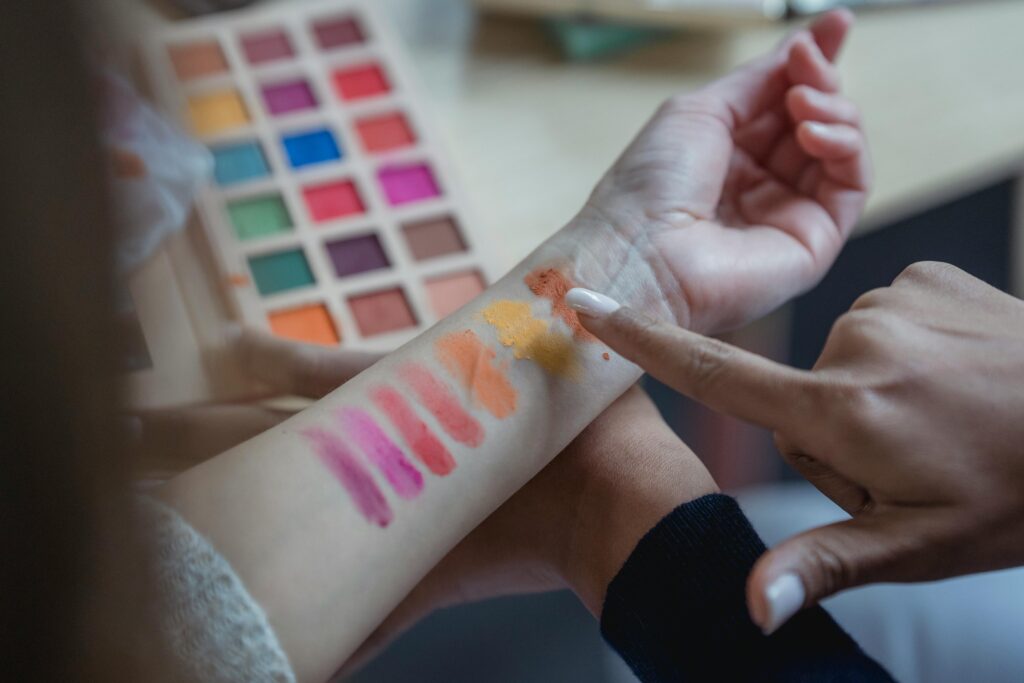
Makeup adheres to similar guidelines. The foundation needs to complement your skin tone, yet blush, lipstick, and eyeshadow perform optimally when they correspond with your seasonal undertone. A person with a warm complexion might appear mismatched if they use cool pink lipstick, even if the shade matches their skin depth. However, the same individual would look vibrant and natural in shades of coral or peach, as the warmth in the lip color reflects the warmth in their skin. The objective is to achieve balance across all elements near your face. This includes clothing, accessories, metals, and makeup, ensuring that nothing clashes and everything complements each other.
One of the few methods to appear more lively is using color, which doesn't require any procedures, products, or specific skills. It doesn't cost anything to place a flattering top at the front of your closet or to avoid the one that always makes you look weary. The changes in your skin after 50 are genuine, but they don't have to result in a less vibrant look. Knowing which colors complement your skin tone gives you an edge that most people never consider. And the benefit is clear every time you see your reflection.
Start by observing. Focus on the colors that receive praise and those you steer clear of without understanding why. Hold various tones up to your face under natural light and observe how your skin reacts. The correct colors won't turn you into a different person. They will simply allow your face to appear as it should.
Read More: Online Community Split Over Gen Z Style Following a Controversial Image Going Viral
The article How Choosing the Correct Shades Can Improve Your Skin Tone and Glow After 50 was originally posted onSecret Life Of Mom.
Posting Komentar untuk "5 Colors That Make You Look Older—Stop Wearing Them"
Please Leave a wise comment, Thank you